Apple, Fennel + Pomegranate Quinoa Salad

Apple, Fennel + Pomegranate Quinoa Salad

img_0779


For my birthday in May 2006, my college roommate and good friend gave me a paper bag full of apples. To this day, I  consider it to be one of the simplest and most thoughtful of gifts.

Though I tend to avoid using them in recipes (because I eat them all fresh), apples are my all-time favorite food and I tend to be persnickety about what a good apple tastes like. I have a slight obsession with the kind of apples that can’t be found in most grocery stores and with unique names like Zabergau Reinette, Poundsweet, and Sheepnose. There used to be an old-timer named Joe at the Corvallis market this time of year who would talk my ear off about the 100+ heirloom apple varieties in his orchard while handing me slices to taste, each with a different complex flavor. Basically, I looked forward to market day just to hear his apple stories.
 

img_0765img_0760


When I was working in Ireland several summers back, I traipsed around counting, weighing, and mostly eating berries all day but one of my highlights was the day Andy asked if I’d like a tour of the orchard. I practically jumped in the jeep before the words were out of his mouth. Prior to that, I toured a couple orchards in northern Washington during my experience at the farm & cooking school, Quilasascut. I was the nerdy annoying girl asking too many complex questions the day we visited the apple trees. And before that in pomology, my favorite class at UCD, we visited farmers who, like Joe, had orchards filled with hundreds of varieties. On our farm tours, we walked and talked, eating apples all the while.

Basically, I love any chance to follow farmers around all day letting them share some of their wisdom about apples.

 

img_0783img_0786


If ever I come into possession of a few acres to plant a gazillion ancient apple varieties, I might be on to a new calling. In the meantime, I’m trying to convince William to tear out all the worthless pretty flowering cherry trees in our front yard and replace them with apples. He’s basically the yard maintenance guy in this household and after all the work he put into those cherries this summer with no payout, he’s mostly convinced.
 

img_0799img_0798


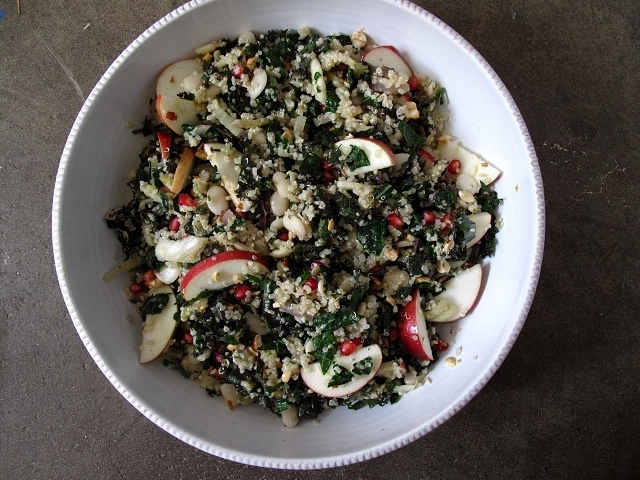
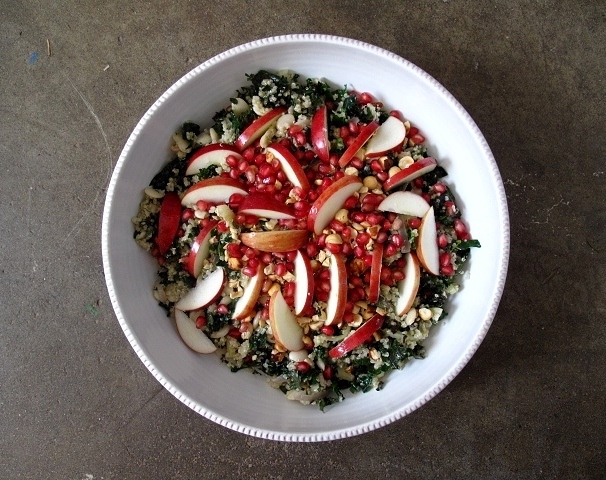
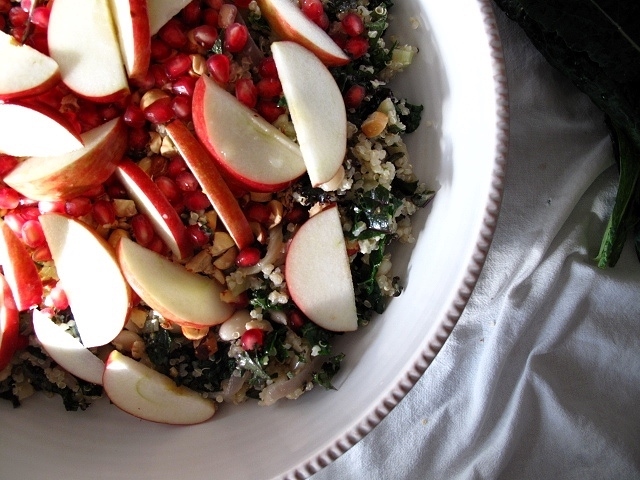
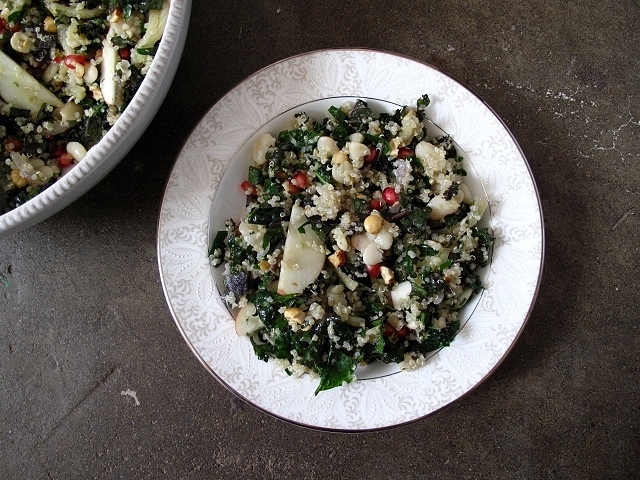
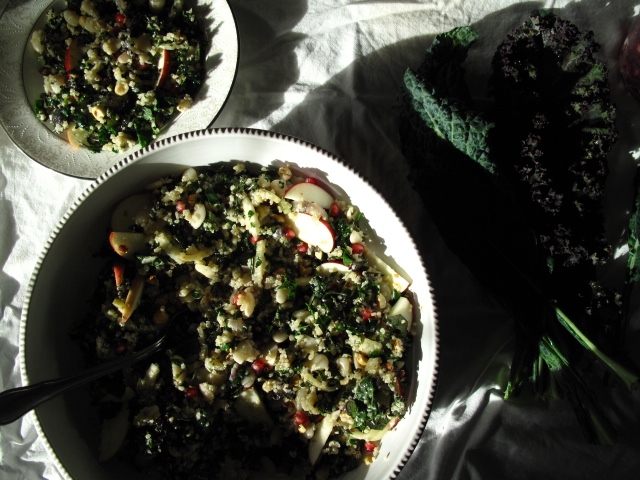
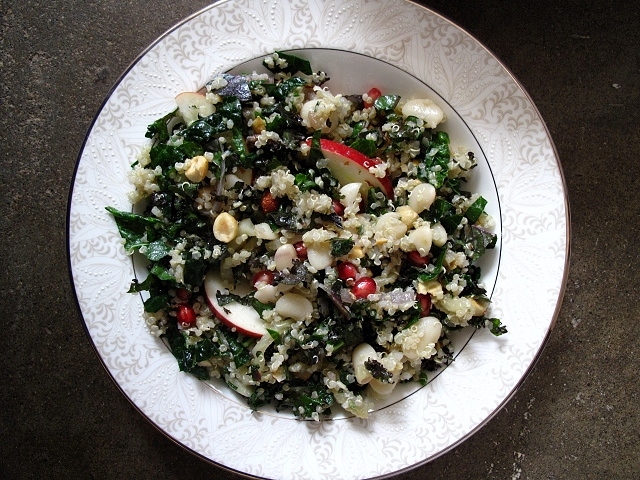
Apple, Fennel + Pomegranate Quinoa Salad, serves 4

For this month’s Recipe Redux, we were asked to show what’s in our Plant Protein Power Bowls, or what I refer to as grain salads. Packed with protein, fiber and color, plant power bowls are trendy and delicious. William and I happen to eat some variation of a one-dish grain salad for dinner at least a couple times each week and have been since way before eating plant-based or from a power/Buddha/yoga/nourish/etc.-bowl became a thing. This one, with it’s seemingly interesting ingredient combination, came together out of what was on hand one evening–and because from previous experience, I love the caramelizy-sweet fennel, fresh sage and apple combination. The kale, quinoa, and baby lima beans just happen to be good additions and the pomegranate seeds provide a little festive something extra. I made this twice in a row and much to my dismay and delight, William (who avoids leftovers) took most of what was left for lunch. This little well-rounded salad was so good, colorful, and as I said, festive, that I might just be making it again for some of our upcoming holidays. Enjoy!

3/4 cup quinoa
1 1/2 cups water
1 1/2 Tbs. olive oil, divided
1/2 red onion, thinly sliced
1 small fennel bulb, thinly sliced
2 cups cooked baby lima beans (or other white bean)
2-3 cups finely chopped kale
1-2 Tbs. fresh sage leaves, minced
1 small apple, sliced thin
1/2 cup pomegranate seeds
1/2 cup roasted/toasted hazelnuts, coarsely chopped
1-3 Tbs. apple cider vinegar, use to taste
sea salt + pepper, to taste

  • Rinse and drain the quinoa and then place it, along with the 1 1/2 cups water in a small saucepan. Bring to a boil, lower the heat, cover, and simmer for 15-20 minutes. Set aside to cool.
  • In a sauté pan over medium-high, heat 1/2 Tbs. olive oil and then sauté the onion and fennel, about 5-8 minutes, until both are soft and golden. Remove from the heat and slide into a big bowl, along with the cooled quinoa, and lima beans.
  • In a small bowl, combine the chopped kale and remaining tablespoon of oil with your hands, gently squeezing the kale to soften it up a bit. Then combine it, along with the sage, sliced apple, pomegranate and hazelnuts, to the quinoa mixture.
  • Add 1-3 Tbs. apple cider vinegar, tasting as you go, and season with salt and pepper as needed.

Apricot, Date + Turmeric Bars

Apricot, Date + Turmeric Bars

img_0822

Over the summer, I learned about 30 herbs and/or spices that are commonly used in western herbal medicine in my second herbal medicine class, and I really relished the opportunity to both broaden and deepen my understanding of natural plant medicines. In addition to learning that skullcap, the plant I had chosen to focus on learning about for an entire term in my first class, is the most popular herb sold through my university’s herbal dispensary, I spent the summer delving into a lot of research about specific herbs for treating inflammation and allergies due to my project for a client with seasonal allergies. I was limited to working with only the herbs in our class list, however, and because of that I chose a fairly non-traditional approach to working with allergies. Turmeric was among the herbs we studied, and though I did not end up recommending turmeric for allergies, I realized I easily could have and was probably expected to.

Though I know a lot more about the benefits of turmeric than I did before, there is much research to suggest that the curcumin compound it contains has extremely strong anti-inflammatory and anti-oxidant abilities and it is beneficial in all manner of disorders and imbalances. Among others, it has antibacterial, anticancer, anti-rheumatic, anti-tumor, antiviral, anti-phlegmatic, and anti-parasitic properties. I’ve recommended it to my mom who has arthritis, runner friends for pain, and have taken it myself for (nearly instantaneous) relief after slamming my knee into a door. Though my knee incident was an exception, I take a different approach to using herbs than we would for pharmaceutical drugs; I don’t take them for their quick effect. Instead, herbs work to slowly and gently bring the body back into balance, and they work better in conjunction with other lifestyle supports, like getting enough rest, a balanced diet, exercise, etc.

Turmeric is extremely trendy right now, and while there is good reason for it to be, I also like this article about practicing caution with it, as with all herbal medicines. Too much of anything, even a supposed health food, can push us into imbalance. While I came to this conclusion on my own and no longer pop a curcumin supplement for running recovery “insurance” on a regular basis, I do tend to use it in small amounts frequently–and mostly because I really enjoy its flavor.

What I really enjoyed about the class is that we delved into the research on a number of common herbs and spices–ones we are already using and that aren’t the new trendy superfoods–like the ginger and cinnamon these bars contain. After 14 weeks of reading a ton of research articles, I finished the class even more in support of the importance of eating healthfully as the norm and using herbs and spices in small amounts throughout the day in whatever foods we’re eating so perhaps there’s a little less need to use any medicines–herbal or otherwise–to “fix” imbalances.

img_0817

Apricot, Date + Turmeric Bars, makes 4
Recipe updated: July 2024
I regularly rely on bars for after workouts and for busy afternoon snacks on the go. While I have a few versions of granola or energy bars on this blog that I do go back to, for the last few months I’ve been opting away from oats and grains as a main ingredient. Instead, I’ve been adapting a favorite packaged bar. It has taken many renditions but now that I’ve finally gotten the base consistency to my liking (actually better than the packaged bar which I find a little too sweet,) I’m excited to begin delving into a few different flavor combinations, especially as William doesn’t favor my heavy affinity for the ginger/cinnamon/cardamom/turmeric spice combination and prefers the berry/fruity realm instead. For these bars, don’t forego the black pepper, as it helps the turmeric to be become more bioavailable. Additionally, for the options I’ve listed, the first is my favored ingredient but I also enjoyed the other options listed. Enjoy!

1/3 cup / 40 gr sunflower seeds
1/4 cup / 40 gr dates, pitted
1/3 cup / 40 gr dried apricots
3 Tbs. / 30 gr hemp protein powder
1/8 tsp. sea salt
1/4 tsp. turmeric
1/4 tsp. cinnamon
1/8 tsp. ginger
1/8 tsp. nutmeg
dash of black pepper
3/4 tsp. blackstrap molasses
1 Tbs. water, as needed
1 Tbs. / 10gr hazelnuts
1 square /10 gr candied ginger, chopped  (optional)
1 cup /28 gr crispy rice cereal

  • Puree the sunflower seeds in a food processor until turning into a butter. Then add the dates and apricots and puree for about a minute.
  • Add the hemp protein, salt, spices, and molasses and process until combined; stop before it becomes completely smooth. Add  about 1 Tbs. water as needed to bring it together.
  • Then add the hazelnuts, candied ginger and about 90% of the rice cereal, and pulse until they are all just mixed in. Add in the remaining cereal and either hand-stir in, or pulse one to two more times. You want some texture remaining.
  • You should be able to pinch the mixture in your fingers and have it stick together, but not be just one big fruit/nut mass in the processor.
  • Turn out and press into an small square or rectangular dish, such as a 4×3-inch lidded-glass storage container. Cut into individual bars when you’re ready to eat, and chill/store any remaining in the fridge for up to 10 days. Ultimately, this will last much longer, but it dries out and tastes less fresh over time.

Roasted Sweet Potato + Beet Soup

img_5042


Sometime in the early months of 2013, I discovered a whole new genre of food blogs. At the time, I was coming home from work to an always empty house, laying on the floor for an hour to re-calibrate from my day, working myself into a 30 minute or so run, and then reading a couple food blogs over dinner (usually a sweet potato, roasted during that run, with black beans, salsa, and a pile of greens), working another couple hours just to survive the next school day, and falling into bed into a deep and dreamless sleep before my alarm clock wrenched me out and up and into another day that was much the same. I was exhausted and unhappy — but I was learning so much and I could tell if I could just keep putting one foot in front of another and trust my intuition, I’d end up in a better place. Also, I was learning a new way to eat and cook and it’s safe to say in my years-long shift in eating, a major one was slowly taking place.

One of the blogs I discovered during that time was Sarah Britton’s My New Roots, and it was from her that I first learned about the “holy trinity of flavor,” or what I’ve now learned is referred to as FASS. Personally, I like to call it the four corners of cooking.

Sarah shared about an experience in her cookbook of a chef thinking her soup was bland and teaching her that every dish needs to have an acid, a salt, and a sugar, or will taste a little less than ideal. This is Sarah’s holy trinity of flavor. In the four corners, a fat is added to that trio, to make FASS. For each of the four components, a little can go a long way.


img_0465

img_0468


It was soup week this last week in my cooking lab for nutrition, and we experimented with refining the four corners of our recipes. Flavor is a very personal thing, but I found that very simple recipes with few ingredients, a little fat, an acid, a sweet note, and some salt can work wonders in making a recipe taste delicious. After eating different types of soup for several days and using William as my second taste-tester, I felt the need to share the humblest of soups from this week. I say it is humble but it was also the one that absolutely hit the spot, more than once, after coming home late from long days of work, hard runs, and commuting.

I wrote up a description about working with the four corners of flavor for class this week, and because I think everyone should cook with flavor, I’ll share a rendition of it here: First, when refining flavors, make sure the dish is at the temperature you will serve it at, as the flavors will change, depending on whether you are tasting it hot or cold.


img_0447


For any given recipe, it is likely that a fat source as either butter or an oil will likely be used in building the base. The fat type can add flavor, if it is intended to, or if added near the end as either a cream or nut cream, can add mouth feel and a change in texture as well. Adding a fat such as lightly toasted and chopped nuts can also be a flavor-enhancing garnish to round out a finished recipe.

As an acid component, a squeeze or two of lemon juice or one of the many types of vinegar can be added. The small amount of acid added at the end of cooking will enhance and sharpen the other flavors of the dish.

Salt, the third component, is likely the most important, and can really heighten the other flavors. The right amount of salt is a very personal thing, and it can easily be overdone to the recipe’s detriment, so add it in small amounts and taste as you go. You will know when you’ve added the right amount.

The fourth corner is sugar. Depending on ingredients, you might already have a sugar component. For instance, in this roasted vegetable soup, the roasting of the vegetables prior to adding them to the broth brought out their natural sugars through the process of caramelization. For this soup, I did not need to add any additional sweetener. The sweet flavor balances and rounds the soup and also will satiate the appetite, which is why if it is missing from a meal, we often finish wanting more, even though we’re physically full.


img_5043

Roasted Sweet Potato + Beet Soup, serves 2-3
Feel free to use whatever root vegetables and beans are on hand or desired. Recipe adapted from Eleonora Gafton. 

1 Tbs. olive oil
1 sweet potato, medium dice
1-2 large beets, medium dice
1 large carrot, roll cut
2-3 small turnips, medium dice
1/2 large yellow onion, medium dice
1 clove of garlic, minced
4-5 cups vegetable broth
1 sprig of fresh rosemary
1 sprigs fresh thyme
1 bay leaf
2 Tbs. fresh parsley, minced
1 1/2 cups cooked black-eyed peas
sea salt to taste
ground black pepper
a squeeze of lemon juice, as necessary

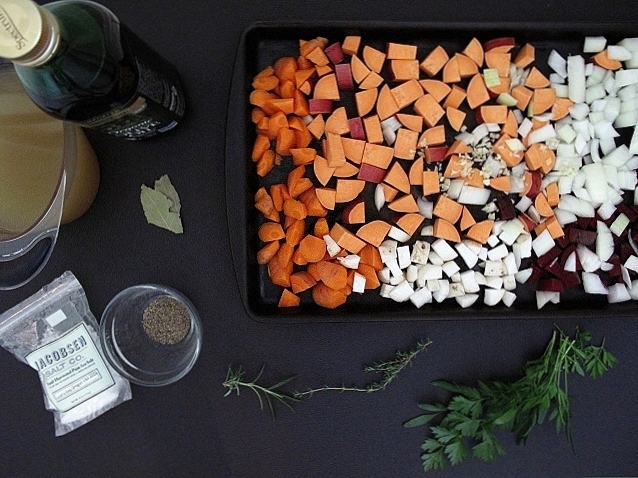
  • Place all diced vegetables on a large baking pan and drizzle with olive oil and a pinch of salt.
  • Roast them in a preheated oven at 400 degrees F for 20-30 minutes or until the vegetables are soft.
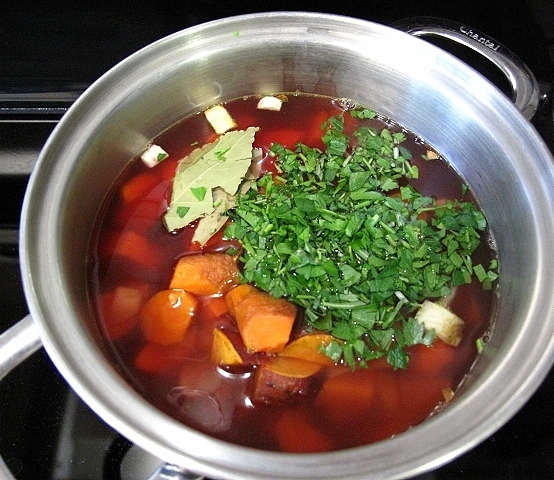
  • In a large pot, add the roasted vegetables and herbs, along with the broth and beans. Bring to a boil, reduce heat and simmer for about 10 minutes.
  • Season as needed with additional salt, pepper, and lemon juice. Serve with fresh chopped parsley, and if you’re in the mood, fresh baked scones or cornbread.