getaway run + picnic muffins and a few good things

IMG_2536


When the weather turns nice and the days grow longer, I start to get real antsy feet and a desire to go adventuring on the weekends. One of my favorite things is to plan weekend “getaway run + picnics” with William, which often include a long trail run adventure out of town, followed by a post run laugh-stretch session, and then a picnic complete with picnic basket, real plates and silverware, and a post-feast laze in the grass. The juxtaposition between a dirty trail run and a much fancier presented post-run meal makes these occasions feel particularly special. They are the ultimate one-day treat and if I’m lucky, we incorporate many such weekends over the long-day season.

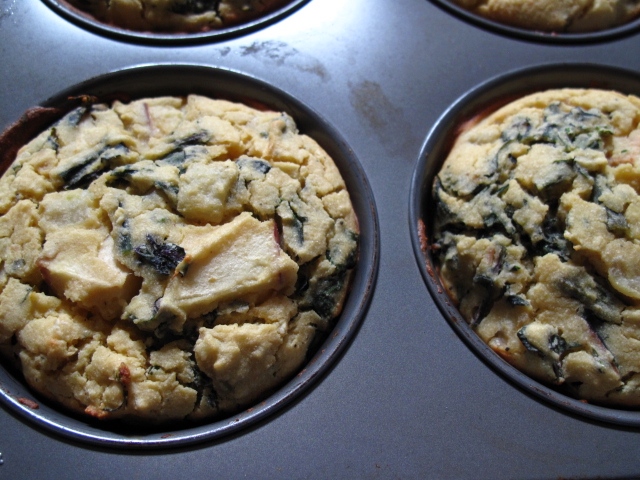
When it comes to the food, I often don’t plan much ahead and throw together something quick from the fridge since really, anything we’re okay with eating at room temperature can be picnic food. One time last year, however, I came up with the idea to make savory muffins for one of these adventures and they went down a real treat. I’ve made them a few more times since and found the ingredients to be fairly interchangeable, but the novelty of a special post-adventure savory muffin has yet to wear off.

 

IMG_6357IMG_2532


On the other hand, on weekends when we’re not adventuring, or on the weekend mornings when I plan to be especially indulgent for hours before venturing out, I love to clear out my inbox, read all the things online and off, journal, and generally laze about with tea in hand. With a whole new getway run and picnic season ahead of us, and longer mornings to indulge in the sun’s early glow, I’m leaving you the option to either make these muffins and go for an adventure, or settle in to a cozy morning of reading/inspiration. Or perhaps you’ll plan, like me, to do both!

  1. Since I love all things reading, books, libraries and lists, I recently created a recommended reading area on the blog to share all my favorite cookbooks, nutrition and related topics reads, and a few others.
  2. Speaking of cookbooks, I’ve been a little obsessed lately with the Banana and Cacao Granola from David and Luise’s latest cookbook. I put my own personal spin on it with toasted local hazelnuts, puffed rice, and other seeds, and find it it simply outstanding.
  3. If you haven’t discovered or read Gena’s Weekend Reading posts over on The Full Helping, I highly recommend. While she routinely shares articles and recipes she’s enjoying, I like Gena’s weekly commentary the most, where she shares about her own journey years beyond initial eating disorder recovery, but still adapting through life’s trials of depression, anxiety, relationships, and simply being human.
  4. Relatedly, one of my favorite recipes inspired one of Gena’s, which she shared about in her new cookbook, Power Plates. By now, I’ve cooked my way through a substantial amount of the book’s recipes and can’t recommend it enough!
  5. Rather than create a long list of all the good things I’ve enjoyed reading online, I’ve been creating a pinterest board for the last year and more, which is also a fun way to put it all up visually. Check it out, if you’re interested in more.
  6. Lastly, I found the news about how much gluten those that follow a strict gluten-free diet are actually ingesting really interesting and not at all surprising, given my own ongoing phases where I have glutened-symptoms almost every time I eat food prepared outside my home. Now, I can’t wait for what to do about this problem and how to best ‘live normally’ despite these obstacles. Fortunately, progress continues to be made in the realm of celiac disease and gluten sensitivity research!
 

IMG_2534IMG_2538


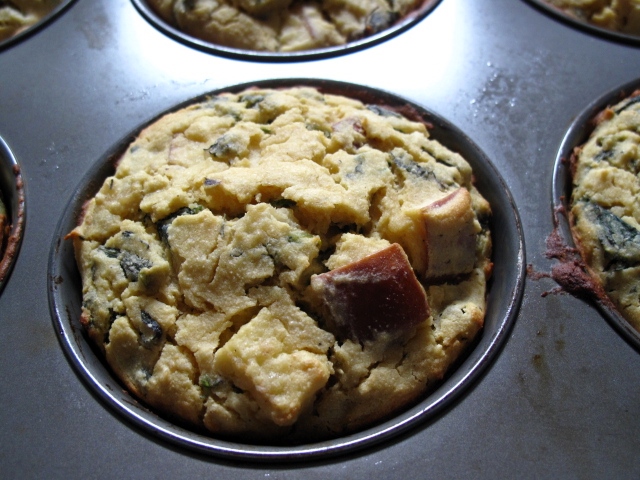
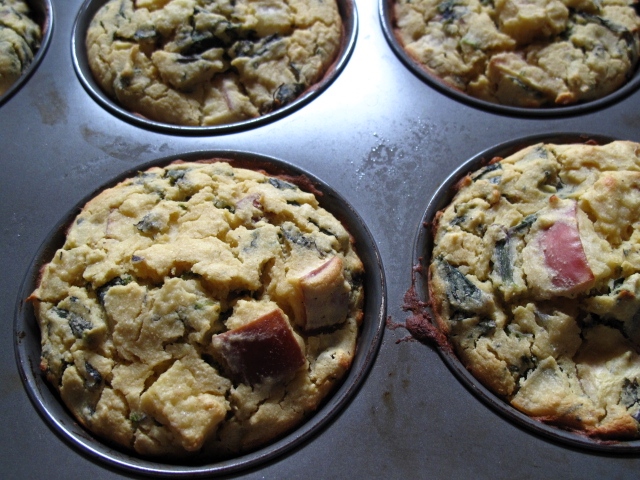
savory getaway run + picnic muffins, makes 6 jumbo size muffins
The vegetables in these can be easily changed up depending on what you have, but I find that adding just a little sweet apple really rounds out the savory flavors.

1 small onion, diced
2 cloves garlic, minced
1/2 tsp. dried thyme
1/4 tsp. ground black pepper
1 large apple, diced
1 large bunch kale, diced
3/4 cup cooked white beans
9 Tbs. aquafaba or 3 flax eggs
1 Tbs. coconut oil
1 Tbs. honey
3/4-1 cup / 180-240 ml non-dairy milk
2 tsp. apple cider vinegar
2 cups / 210 grams chickpea flour
1 tsp. mustard powder or 1 Tbs. Dijon mustard
2 tsp. baking powder
1 tsp. sea salt, divided

  • Preheat the oven to 400ºF (200ºC ), oil a jumbo 6-hole muffin tin or line with paper cup liners.
  • Heat a little oil of your choice in a skillet over medium heat. Add the chopped onion and sauté until soft, about 5 minutes. Add the garlic, thyme, black pepper, and 1/2 tsp. salt and sauté for a further 5 minutes. Then, add the apple and the kale and sauté until the apple is just barely beginning to soften and the kale has wilted. Remove from the heat and set aside while preparing the other ingredients.
  • In a food processor or blender, puree the cooked beans until they form a smooth paste. You might need to add a little water to them. Once pureed, they should measure out to about a 1/2 cup. Add them along with the other liquids to a small bowl and then set aside.
  • In another medium mixing bowl, measure out and mix the flour, baking powder, and remaining spices.
  • Pour the wet ingredients into the flour mixture and using a spatula, start folding them together, along with the onion, kale, and apple. Mix just until combined.
  • Divide the batter evenly between the cups of the muffin tin and bake for about 20 minutes or until golden and a toothpick inserted in the center of one of the muffins comes out clean.
  • Remove the muffins from the oven and set aside to cool slightly in their pan before transferring to a wire rack to cool completely.
  • They will keep for a few days if stored in an airtight container either at room temperature or in the fridge, and they also freeze well.

recipe-redux-linky-logo

Sweet Beet + Elderberry Oatmeal

IMG_7181

 
Happy Easter Friends!

Today I have a recipe I’ve been making on repeat for the last couple months, and one I’ve been meaning to share for weeks. But in truth, I’ve been busy. And stressed.

In what I knew would be a packed late-winter season, my class schedule was on overload for what ended up being six weeks. When I signed up for them, I thought it would be three to four, and knew I could get through for one jam-packed month. But then a job opportunity landed that I decided to take, my running coach decided I could handle more miles (and thus time), and one of those classes was taught by a professor that was amazing, but intense. Even for grad school.

So in light of all the action happening at once, I took a class extension. I dropped creative projects and unproductive activities like social media, I spent all my waking hours working or running save a precious few in the early mornings and evenings, and I just got through.

I’m still recovering, trying to prioritize down time, read some good books, bake (currently experimenting with gluten-free/vegan hot cross buns!!), and run with joy and gratitude. And also, feed myself well.

And while it’s spring break for many, I’ve a couple more weeks before I get there.


So today, let’s talk a little more about stress, overwork, and the nutrients that are necessary always, but even more so when we’re trying to bulldoze forward at full speed. The first are the entire friendly group of B Vitamins. 

The essential B vitamins are necessary in every step along the pathway of converting food into energy. When the body undergoes any kind of stress, whether it is physical or emotional, and feels depleted, the B vitamins are likely needed to restore balance and energy. In addition to converting food into energy and helping to cope with stress, many of the B vitamins can also help alleviate symptoms of insomnia, nervousness, PMS, and mood swings.

Each of the B vitamins (B1, B2, B3, B5, B6, B7, B9, B12, and their friend Choline) have their own specific roles, but they function quite well as a group. They are found abundantly in whole foods, particularly in whole grains, legumes, seeds and nuts, fruits, and vegetables–except for B12 and Choline, which each deserve their own discussion another day. In order to incorporate the spectrum of all of these essential nutrients into your diet, it is important to eat a wide variety of fresh, colorful, whole foods.

Most of us are actually getting sub-optimal levels of these nutrients, especially when we are overworked and very active.


Next up in importance in times of stress is Magnesium

Magnesium is a key player in over 300 biochemical reactions and is essential for creating and maintaining healthy bones, energy production, nervous system balance, and blood sugar control. And it is anti-inflammatory. Magnesium is required for DNA and RNA synthesis as well as the synthesis of glutathione, which is a powerhouse antioxidant that combats free radicals and cellular damage.

Like the B-vitamins, Magnesium is often lacking in the modern diet, our needs are more when we are stressed either physically or mentally, and it’s abundant in whole foods like leafy greens, beans, nuts, and seeds, and whole grains.


Finally, when we are overworked, our immune system takes a hit, and it’s during these times that we often fall victim to colds and flus. While winter flu season theoretically should be winding down, the mega virus(s) that’s been hitting hard these past few months is still going strong. Enter my favorite immune booster, elderberries.

Elderberries have strong antiviral properties and have been shown to shorten the duration of cold and flu outbreaks in research. They also have a very long history of use in traditional medicine. Made into a delicious syrup and combined with anti-inflammatory ginger (which I’m now making and selling in my shop), a daily small dose during times of increased stress gives a good immune boost*. I’ve been taking it all winter and especially these last few weeks, and even with exposure to a whole lot of sick kids, have been staying healthy.


IMG_7203


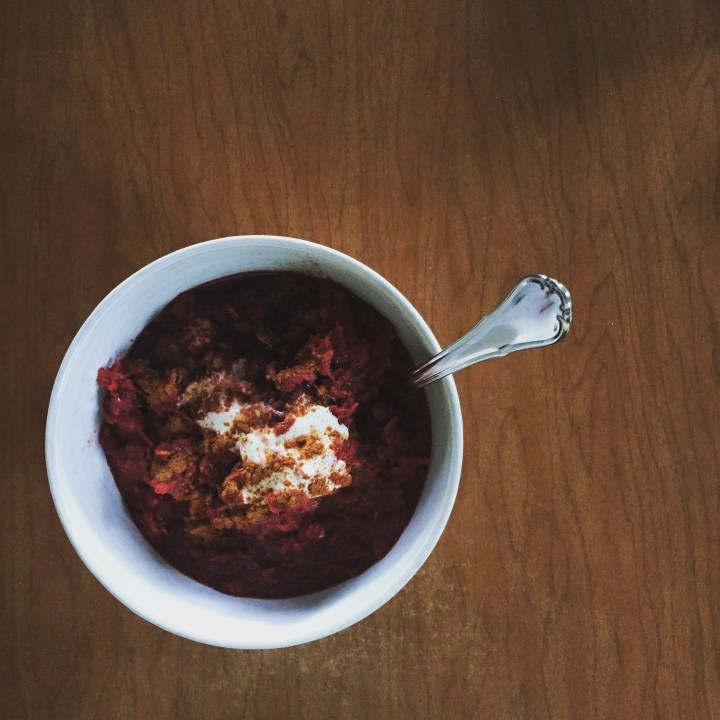
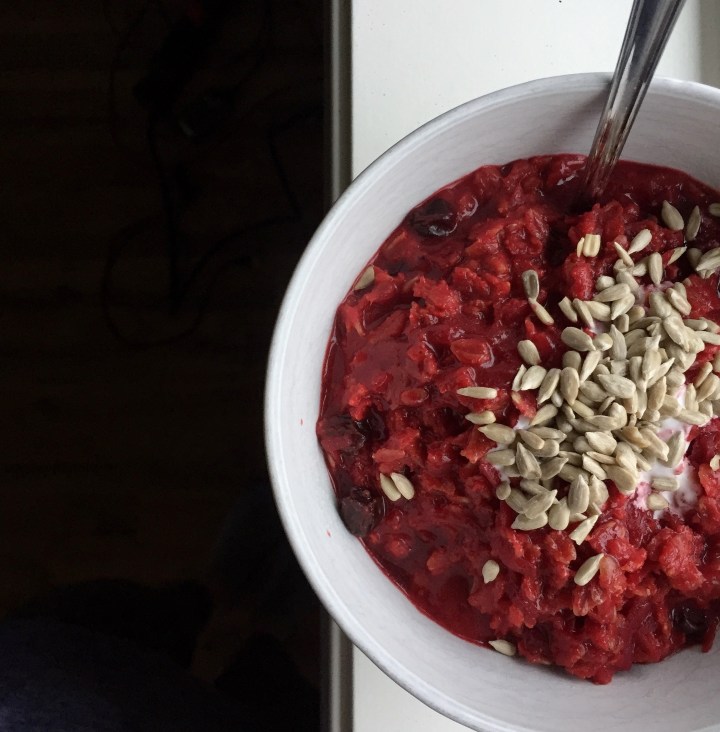
Sweet Beet + Elderberry Oatmeal, serves 1-2
Due to all the aforementioned whole foods I’ve packed into this delicious breakfast bowl including oats, beets, flax seeds, sunflower seed butter, as well as a little drizzle of elderberry syrup, this makes for a really nice start to the day. It’s one of my favorite breakfasts lately, and definitely feels like a meal that brings to life the meaning of self-care and stress reduction. For busy mornings, I like to prep all the ingredients, save the oatmeal and toppings in a saucepan the night before, and then store it in the fridge. In the morning, bring the pan to a boil, add the oats, cook until done, and then add toppings and serve. 

1 1/2 cups water
1 medium-ish beet, finely grated
3/4 cup old-fashioned oatmeal
1/8 tsp. sea salt
1-2 Tbs. raisins
1/2 Tbs. sunflower butter
1 tsp. elderberry syrup
a dash of cinnamon, optional
1 tsp. ground flax seed, optional
additional sunflower seeds to top

  • Bring the water to a boil in a small saucepan. Add the finely grated beet, salt, raisins, and oatmeal. Turn down to medium-low and cook until soft and to desired consistency, about 8-10 minutes. You might need to add more water, as needed.
  • Then stir through the sunflower butter, remove from heat, and add the syrup and any additional desired toppings. Enjoy, ideally in a non-distracted setting for the ultimate self-care.


*These statements have not been evaluated by the FDA. This product does not intend to treat, diagnose, cure, or prevent any disease.

Post-Run Pancakes, and creating a food community

IMG_7133

Over the past few months, William and I have been hosting, or being treated to, many shared meals with friends. We’ve been living in Eugene for over two years now, and though we still don’t love the city or consider it our long-term home, we’re slowly finding ways to make a community while we’re here. In almost every way, that developing of community centers around food.

We have a couple friends here that, unlike virtually any others so far, I trust can cook for me. I won’t be unknowingly eating gluten and getting cross contaminated, and I’ll enjoy the food and company. I won’t stress about what will be on the menu beforehand and if I’ll have to miss out on half the spread, or need to plan to take a side dish just in case. I can go about the whole experience being totally relaxed and spontaneous. This experience, though I know is the norm for those who don’t have food allergies and/or a history of disordered eating, feels like the biggest of victories for me, and one I don’t take lightly.

Like many people who have struggled with an eating disorder, I’ve always been drawn to food. I grew up just completely fascinated with it, always experimenting and exploring, always wanting to know more. Nothing about that has changed but the sharing of it, either at a friend or relatives’, or just spontaneously going out to eat, has shifted dramatically in the last decade as I began to develop more tactics for avoiding eating with others, or later, when I realized many of my health problems were attributed to food intolerances, and most friends and family no longer knew how to prepare food that was gluten, dairy, and for the most part meat-free.

That left me (and still leaves me), generally really stressed and anxious about gatherings that involve food. I don’t like to be the center of attention. I don’t enjoy having to make special requests. But I also don’t enjoy going to meals knowing I won’t really get to participate in them. As much as many of us have heard the advice to just focus on the people rather than the food, there’s something about the food that draws us together and opting out of that aspect is to me, a little like trying to arrive at a complete and finished puzzle, without having half the puzzle pieces.

Related to this, I like what Aran Goyoaga of Cannelle et Vanille said recently in an interview on the emotion of food:

I think my eating disorder and having left my roots really left me in limbo for many years. I stripped myself of identity so I could know who I am inside and what my purpose is while I am here. I have realized that the vulnerability I have felt the last few years by sharing a bit more of my true story of anxiety and depression have connected me to people and myself in ways I didn’t think were possible. And it’s interesting that I did this through cooking and sharing food, which for many years had such an emotional weight attached to it. It’s through the act of cooking for others and sharing a table that we can make time to connect at deeper levels. We can access levels of empathy and intimacy that are hard to feel in other ways. Also let’s not forget that food has tremendous healing energy. It can ground us and make us stronger or totally mess us up both physically and emotionally.

Other than being really grateful for friends that love to eat and cook similarly to me, and for those that go out of their way to accommodate my gluten and dairy-free needs by learning how to cook and/or bake in this way just so I can be included, I’m learning that being more assertive, giving, and willing to educate others, both about food intolerances and allergies, and about the mental health aspects that some of us bring to eating, are really important. Both of these often parallel topics are ones that I feel a little more called to having a conversation about with friends over a good meal, rather than brushing them under the table and pretending everything is just okay.

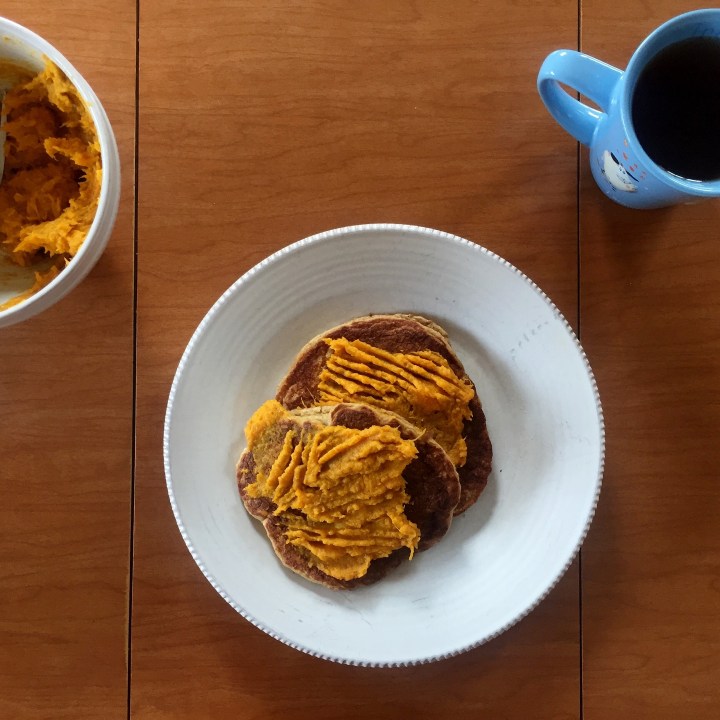
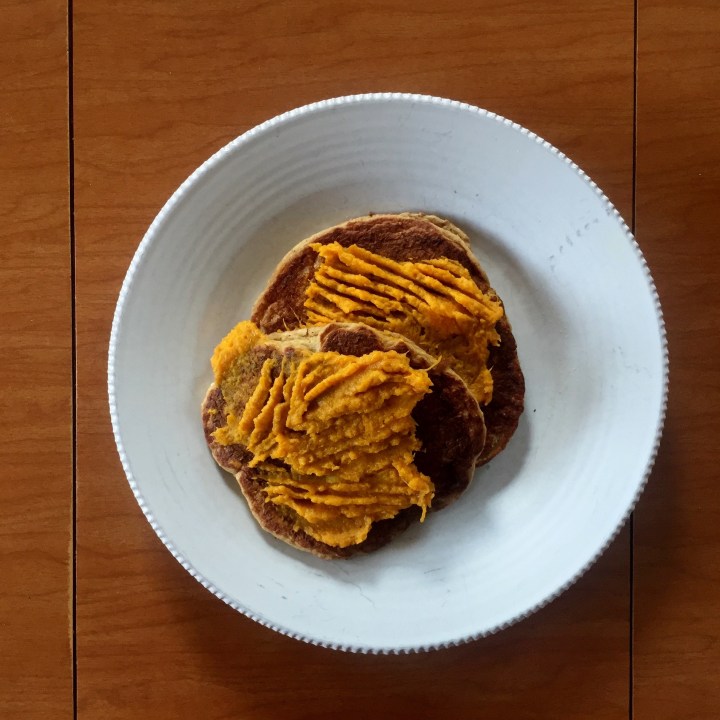
With that, The Recipe Redux invited us to to make and share bread this month. Though I’ve alluded to my current sourdough fixation here and on instagram many times over the last year, I’m still in the experimenting stage — because the art and perfection of slow bread is something I’ve long been called to and having a finished recipe that is ready to share still feels a long way off. I do have a really decent sourdough pizza crust going lately but given this dreary, cold, late winter season, my own personal need for comfort foods in the way of pancakes, and past history of pancakes making quite the meal to share with others, this quick little bread-based meal is one I hope you get the time to make. It makes my favorite gluten-free and vegan pancakes so far, is 100% whole-grain, and with the help of a coffee/spice grinder, most of the flour is fresh milled so it’s really quite nutrient-packed. I’ve also taken out all the oil and added in antioxidant-rich sunflower seed butter which gives it a really nice rich flavor. And because I’m still working my way through the last of the season’s winter squash, I find a really nice topping is a spiced squash and sunflower butter puree.

All together, both because these are comforting yet wholesome, and packed full of all the antioxidant nutrients (vitamins A, E, selenium, zinc), B-vitamins, magnesium, and iron that athletes need, I think these are great with the winter squash topping for after workout meals (that’s running for me), or perhaps just to share with a friend or loved one when you both need good conversation and lots of late-winter nourishment.

Enjoy!

IMG_7135

Post Run Pancakes, serves about 2
These make nice, fluffy, whole-grain pancakes. If you’re without or adverse to a little xanthan gum, either leave out or add a little more ground flax. They won’t be quite as fluffy, but still really good!
 
1/3 cup / 60 grams millet
1/4 cup / 40 grams buckwheat
1/4 cup / 20 grams chickpea flour
1/4 tsp. xanthan gum
1/8 tsp. salt
1 tsp. baking powder
1/2 tsp. baking soda
1 Tbs. ground flax mixed with 3 Tbs. warm water
3/4-1 cup non-dairy milk
1 Tbs. raw apple cider vinegar
1 Tbs. sunflower seed butter
coconut oil, for cooking
  • Whisk the vinegar into 3/4 cup of non-dairy milk and set aside for a few minutes.
  • Heat your skillet or griddle where you will be cooking the pancakes. They’ll cook over medium-high heat.
  • In a coffee/spice grinder or food processor, add buckwheat and millet grains and grind until they reach a smooth flour consistency. Then, mix them in a medium bowl with the chickpea flour, xanthan gum, salt, baking powder, and baking soda.
  • In a separate bowl, whisk together the flax-water mixture, milk, and sunflower butter. Pour the liquids into the dry ingredients and whisk lightly until combined. Add more milk as needed.
  • Lightly oil the skillet with coconut oil, and use about 1/3 cup of batter per pancake. Flip the pancakes when the bubbles appear on top and the bottoms are browned.
  • Cook on the second side until cooked through and browned on the bottom.

Spiced Winter Squash Puree
1-2 cups mashed/pureed winter squash
2 Tbs. sunflower seed butter
a few dashes each of cinnamon, ginger, turmeric, cloves, and black pepper
a pinch of sea salt

  • In a little dish, mash together all the ingredients and season to taste with sweetener, as desired. Serve over the pancakes.

recipe-redux-linky-logo