chamomile + dried plum nut butter bars

Last week I shared about the connection between the gut and the nervous system. After hearing from several that it was helpful, I’ve been thinking about the use of herbs in particular for nervous system and gut support.

Herbs in the category called nervines really shine here. They are the herbs that specifically affect the nervous system. While there is a giant list of herbs that can be used for nervous system support depending on where and what type of symptoms are showing up for an individual as well as the person’s energetics, chamomile, skullcap, lavender, holy basil / tulsi, lemon balm, and California poppy are some of my personal favorites. When we get to the point of really using herbs medicinally to promote balance, we often need them in larger amounts such as at least three cups of tea daily for several weeks, or an herbal tincture, large amounts of herbal powders, etc. It becomes like taking medicine, only with no side effects, nutritional interactions or depletions (when administered correctly).

But before we get to that stage where it’s best to have either more personal experience or guidance by a trained professional to take herbs at a medicinal level, many of us can benefit from incorporating more herbs into our everyday foods. This is what a lot of our ancestors did by collecting herbs that grew nearby and incorporating them into household remedies and cooking. And that’s what I’ve done here.

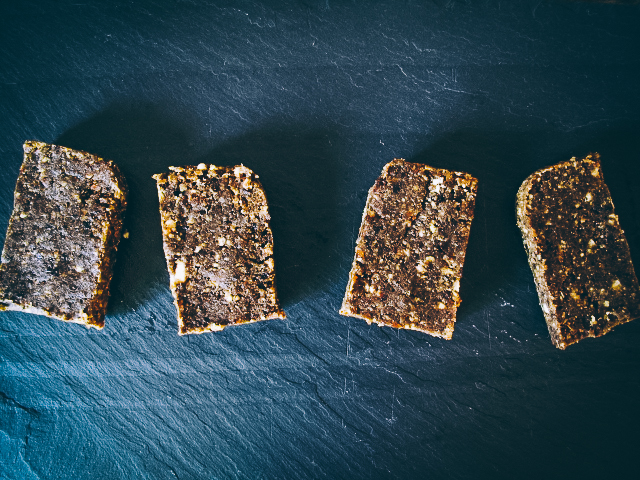
This is a base recipe for a nut/seed butter and dried fruit bar that I routinely make to enjoy as a snack. In this particular version, I added chamomile flowers and dried plums, two foods with a particular affinity for gut health. Many individuals enjoy chamomile as an evening wind-down tea but if you steep it long enough or bite into a whole chamomile flower, you’ll notice a definite bitter taste. That bitter component is important for gut health! We need bitter flavors to help the digestive system function properly, since the bitter taste stimulates the digestive system by activating gastric juices and the liver so we can break down and absorb our food.

Additionally, you might have noticed the strong, fragrant smell of chamomile in freshly brewed tea. The volatile oils in herbs which have an intense smell gives them an action that is called carminative, giving them the ability to promote a healthy digestive system by soothing inflamed tissues, giving relief from GI cramps and spasms, and helping relieve indigestion, bloating, gas, and nervous/anxious tummys. A couple other of my favorite carminative herbs/spices are fennel seeds, cardamom, and lemon balm, which can all be added to these bars instead of and/or in addition to the chamomile (amounts would need to be adjusted for taste, however).

A couple other ways to incorporate more chamomile into your days is in chamomile tea with ginger and licorice, chamomile tea simply by itself, and chamomile added to morning oatmeal. This apple, walnut, chamomile version is pretty outstanding. Overall, I highly encourage you to incorporate more nervous and digestive system supporting herbs into your meals.

Chamomile + Dried Plum Nut Butter Bars, makes 4
This is a great base recipe to experiment with different flavor combinations and incorporate various herbs into your daily snacks. If you’d rather skip the protein powder, try an equal amount of hemp seeds instead since they’re high in protein compared to many other nuts and seeds. Remember, protein is important in small to medium amounts throughout the day, and helps to balance out the heavy sugar and fat that most snacks contain. These also work great both before and after athletic activity as a quick fueling option, as they’re balanced in their carbohydrate to protein ratio.

3 Tbs. / 50 grams nut butter of choice (cashew or coconut work great here)
1/4 cup / 45 grams dried plums
1/3 cup / 45 grams dates, pitted
3 Tbs. / 30 grams hemp protein (or similar unflavored protein powder, such as plain pea protein)
3 Tbs. loose chamomile flowers
1 cup / 30 grams crispy rice cereal (or 1/3 cup oatmeal)
1 tsp. honey or maple syrup
1/8 tsp. salt

  • In a food processor, combine all ingredients except for a small amount of the rice cereal or oatmeal. Puree all the ingredients until they come together and are slightly sticky to the touch. You might need to add up to 1 Tablespoon water.
  • Then add the final amount of cereal or oatmeal and pulse until it is incorporated but not finely pureed.
  • Turn out into a small rectangular dish and press in. Cut into bars and eat, or store in the fridge and cut and eat as needed. Otherwise, you can certainly make these into energy balls instead if you’d like a circular shape.
  • These keep well for at least a couple weeks.

The nervous system is one of the five primary categories of digestive imbalances I look for when working with individuals clinically. Often when we’re experiencing chronic GI distress, there will be imbalances in several categories, and we begin working on the areas that appear most pertinent. I’ll explain the other categories of digestive imbalance in future articles. And If you’re tired of dealing with your wonky GI, I invite you to reach out to me for more personalized support.

connecting the gut and the nervous system

I had an emotional couple of days last week. If you know anything about the Enneagram personality archetyping, I’m most definitely a type 4, so deep and vast emotions are a familiarity for me. That aside, I was emotional. I cried a fair bit and felt my own little volcano of melancholy come out in periodic waves. One such wave was on a run last Thursday morning. Most long-term runners know certain runs can be incredibly therapeutic and where we work through challenging emotions. This was one of those.

When I returned to the house after finishing and began my cool down stretch, I had a familiar mild, dull pain in my abdomen set in, and it continued throughout the day. As an old familiar, I knew exactly the cause of the pain when I first noticed it. As a sensitive child, I grew up with routine anxious ‘tummy aches,’ on Sundays before a new school week began, couldn’t eat before stressful events, and generally would feel knots in my middle when emotionally distraught.

Unsurprisingly, there’s a reason for this.

For anyone that likes to show up to an athletic race early in the morning, stand in line at the porta potty, and then hope to put your best foot forward in your event of choice, or perhaps engage in a similar nervous-inducing event in another area of life like a job interview, you know that when you’re anxious, nervous, or otherwise stressed, digestion is quite a bit off. That’s because the gut and the brain are intimately connected. The nervous system has several branches and one section, the enteric nervous system (ENS), is often called ‘the second brain.’ The ENS is the section that runs through our digestive system and is connected to the actual brain through a large nerve that runs through are central body and communicates in both directions. This is called the vagus nerve.  When we have a really emotional episode, like I did, our brain can send chemical messages to the gut that change our gut bacteria, leading to low-grade gut inflammation and possibly GI distress. Similarly, if we have a particular imbalance in the gut itself—through food that doesn’t sit well or isn’t best for us, or inflammation and excessive permeability to the gut lining for another reason, we often notice behavioral changes as well. For example, persons that have chronic GI distress often also experience one or several mental health symptoms, including anxiety, depression, fatigue, confusion, brain fog, poor memory, migraines, and more.


When we have continued stress, whether in our body or in our mind, the nervous system slows down or impairs digestive function. This is why it’s best to not eat when we’re in a stressful mindset or running out the door in the morning before work or while rushing between meetings. And why one simple way to improve digestion is to single-task while we eat. That is, eat in a quiet, peaceful environment and do only that. Just eat, enjoy, and actually chew the meal. And its why major stressful life events often precede major health symptoms and then diagnoses. If you struggle with digestive conditions such as one of the Irritable Bowel Diseases (Crohn’s, Ulcerative Colitis, Diverticulitis, etc.), IBS, GERD, ulcers, chronic constipation or diarrhea, and any autoimmune disease, your condition will often respond favorably to stress-reduction techniques. For athletes with any of these conditions, we often argue that our physical activity is our source of stress reduction. That may be true—in theory—but often our activity load is contributing stress when our physical and mental systems are way out of balance.

True rest and relaxation, such as spending an hour or more per day doing absolutely nothing, deep breathing, meditation or prayer practices, spending quiet time in nature, gardening, yoga, painting, or other quiet activities without a screen are sometimes exactly what we need most to begin digestive healing – not a fancy, stressful, rigid new eating plan. (Gasp! I know; how dare I say that as someone that works with people on food!)

Otherwise, I love to work with herbs for the nervous system. In fact, nervines, the category of herbs that work on the nervous system, are by far the ones I work with and recommend the most. Lavender in this blueberry lavender smoothie bowl, and skullcap, tulsi / Holy Basil, lemon balm, and lavender in this stress-reduction tea or herbal latte are just a couple relax-inducing herbal ideas to consider.

The nervous system is one of the primary categories of digestive imbalances I look for when working with individuals clinically with impaired digestion. Often when we’re experiencing chronic GI distress, fatigue, or anxiety, there will be imbalances in several categories, and we begin working on the areas that appear most pertinent. I shared about the immune response and subsequent inflammation in part two, gut microbes and dysbiosis in part three, and a tip to support digestion and absorption in part four. I’ll explain remaining categories in future articles.

And If you’re tired of dealing with your wonky GI and would like to get back to feeling and training well, I invite you to reach out to me for more personalized support.

References:
1: Lipski, L. (2012). Digestive Wellness (4th ed.). New York, NY: McGraw Hill.

roasted zucchini and crookneck squash with pumpkin seeds, oregano, and olives

I went out to harvest in the garden this morning and after using up about 20 crookneck squash in the last couple days, I harvested a dozen more. And a dozen cucumbers and three tomatoes. I trimmed the tomato plant back a bit so I can see several others are nearly ready, and William on corn duty tells me there are six or more ears that need to be used now. They’ll be as many or more of everything tomorrow.

I somewhat jokingly wrote in an instagram post several weeks back that I’ve found the best way to eat more vegetables is to grow a lot of vegetables. No jokes anymore since at this point in the season, it’s an incredible fact. For me anyways, this goes particularly because even though the romanticism of growing our own has long since worn off, there’s a huge sense of obligation to not waste what we’ve watched growing all season, to not waste the many hours William has spent watering and sifting compost, pulling weeds, and turning over beds.

Me? I mostly just harvest and cook and then take the glory. As is true for most gardeners and farmers, we tend to plant extra of everything because inevitably one or more crops fail– and people who grow things are slightly addicted to growing more things. (A slight problem when the backyard is producing so much). This year so far, nothing has failed. Literally nothing except a slow start and replanting of beets which thankfully won’t be ready until the summer squash, cucumbers, and corn are about done.

Anyhow, one thing I’ve been thinking about all summer is how very little has been stated publicly, in the mainstream US news anyway, about lifestyle factors that can help us through this pandemic season. Eating more vegetables, filling ourselves up on all the colors, nutrients, phytonutrients, and generally eating more whole, looks-like-it-came-directly-from-the-earth, foods can go a long way. I was asked to write a little more in-depth about this topic recently for Territory Run Co., so if you’d like more details on specific foods, nutrients, or lifestyle factors to help through this season (like mindfulness for stress relief), you can find the article here.

Meanwhile, I’ll be trying to figure out how to gift a few harvest extras this week, and chop, roast, sauté, etc. my way through the others. A little Italian flavor inspired, this combination of roasting zucchini and crookneck squash, and topping it with an herby, olive, garlic, and pumpkin seed topping is just one way to add some pizazz to eating your vegetables. If you have a grill basket and would like to take the cooking outside, grilling the squash instead of roasting will be a nice shift in methods.

Roasted Zucchini + Crookneck Squash with Pumpkin Seeds, Oregano, and Olives, serves 4 as a side
Use any type of summer squash you have available. The smaller, less seedy ones have the best texture.

4-8 small to medium summer squash, chopped (enough to fit a sheet pan or baking tray)
1 clove garlic
1/4 cup pumpkin seeds, toasted
1/4 tsp. salt
20 fresh oregano leaves, finely minced (about two large sprigs)
15 small black olives (about 1/4 cup), rinsed, drained and sliced

  • Preheat your oven to 425 F. Line a baking pan with parchment and then spread the chopped squash evenly, so it’s mostly a single layer. Sprinkle with a little salt and roast until soft and borderline mushy, about 30-40 minutes.
  • Meanwhile, lightly toast the pumpkin seeds in a pan on the stovetop, and then remove them to a cutting board. Chop them until they’re in medium-small pieces, small enough to not be able to tell they’re pumpkin seeds, but not super-fine.
  • Mince the garlic and add it to a small dish, along with the pumpkin seeds, salt, minced oregano and olives.
  • When the squash is done roasting, slide it into a serving bowl, and then stir the herby pumpkin seed mixture throughout and serve.