Field Notes, July 20th, 2024

I feel like a really fragile human, I told my husband this morning. It’s the day after I took baby boy to his two-month pediatrician visit. I’ve quickly learned that I become anxious before all baby’s doctor appointments, and I generally enjoy them about as much as him. Which is not at all. We both came home feeling fragile. He whimper-napped and whimper-ate all day, and I cried with him off and on.
There are SO MANY challenges to being a parent in most of the phases, but the combo of months of inadequate sleep due to a newborn and a baby in pain, is absolutely right up there. This weekend, I have hopes to rest as much as I can, shower even more love on baby, and take care of my mental health by going slowly, being gentle with myself, and getting some time in moving my body.

With that, I’m still moving slowly into flexing my creative muscles. I’m back to work very soon, and it feels imperative that I soak up the last of my less rigidly scheduled routine until then.

Reading

The chai-spiced pear oatmeal I enjoy when pears are in season

Enjoying

  • The Hippie Bowl from Sara Forte’s Sprouted Kitchen Bowl + Spoon cookbook. Bonus that William told me it’s one of his favorite meals I make!
  • My own version of the Courgette Flatbreads with Lots of Herbs from Gill Meller’s Root Stem Leaf Flower. This is one of my all-time favorite cookbooks for seasonal meal inspiration, and an absolute work of art as well. I used my sourdough pizza crust, which is still the best gluten-free pizza base I’ve tried.
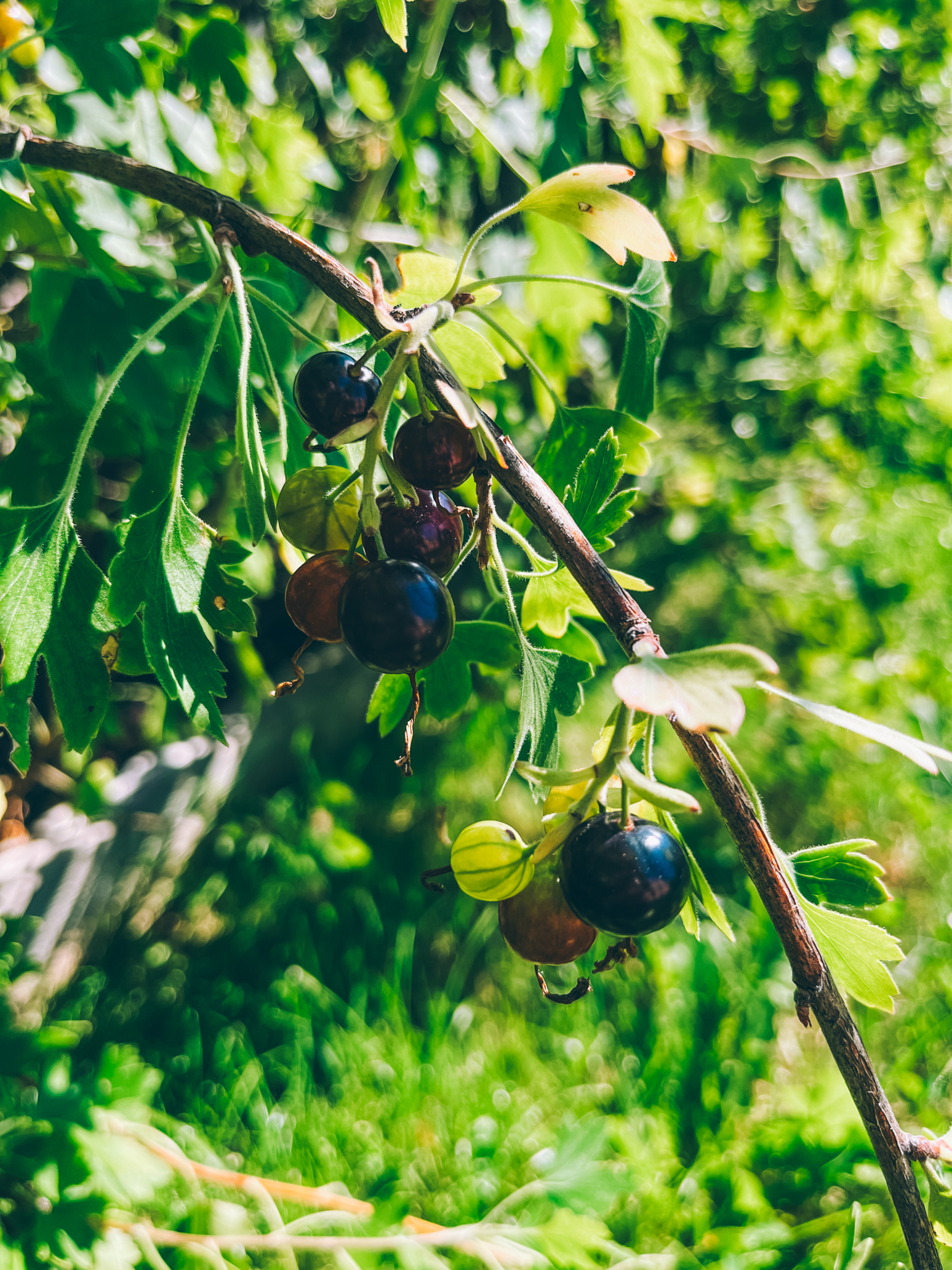
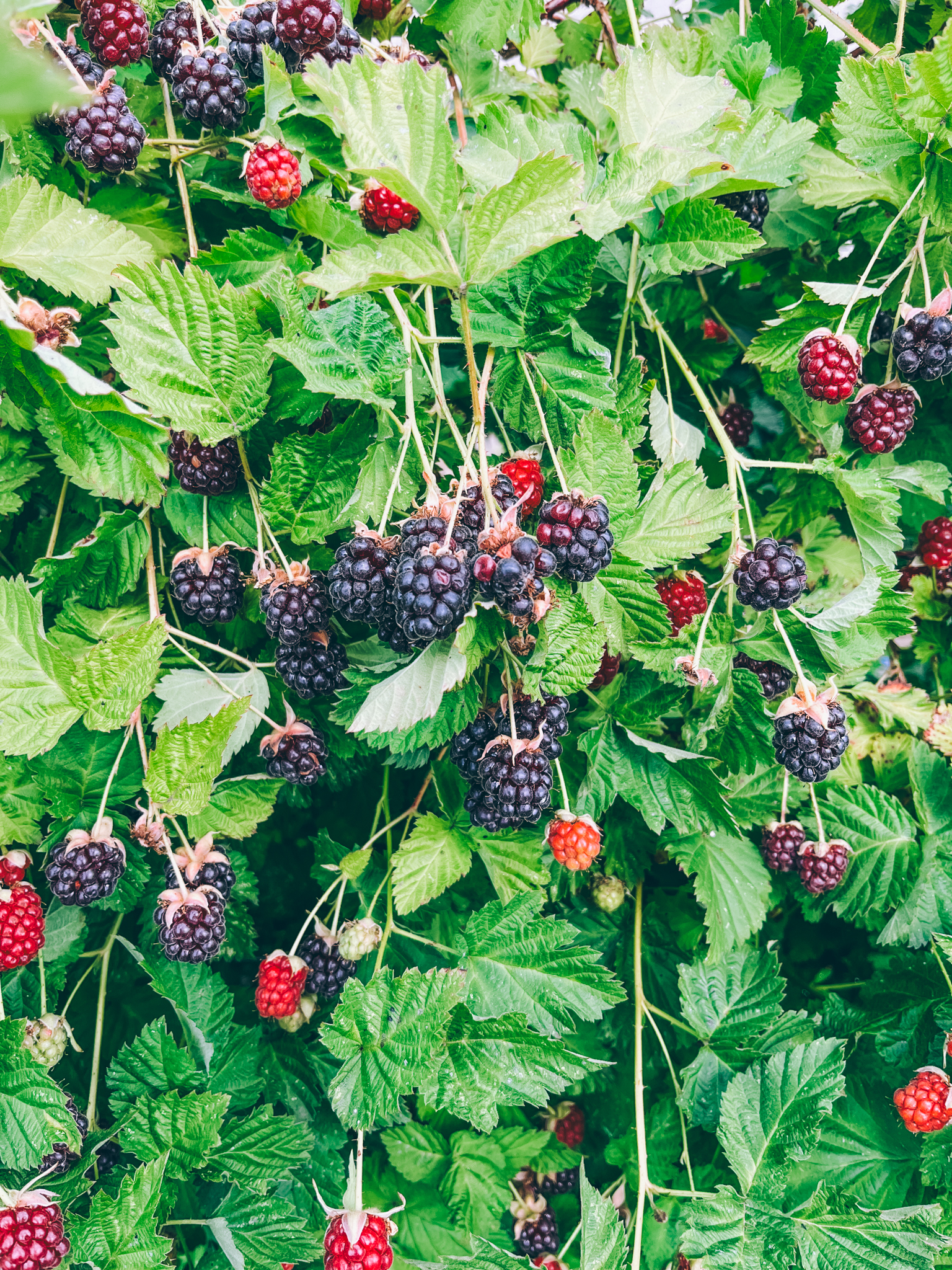
  • Our boysenberries are nearly done for the year, but the black currants are still practically dripping off the bushes. So many to harvest!
  • Aviva Romm’s new Mama Pathway group/program. It is sooo helpful to have a community of like-minded individuals and experts to gather with and gain answers from. It’s a new parent re-assurance goldmine.
  • Slowly easing into longer runs after baby. I’ve been trying to be very conservative in coming back to running postpartum due to the extreme taxation that childbirth has on the pelvic floor and core muscles (I now fully understand why childbirth really is like having a major injury!), the inability to recover from day to day due to lack of sleep and always being on, and the nutritional taxation on the body from breastfeeding. Ooof. Together, it’s quite the combination!
Nutrition and Food/Cooking Questions

  • Why do you say you can have digestion dysfunction even without GI symptoms?
    There’s a saying in Ayurvedic Medicine that when the diet is right, there’s no need for medicine. And when the diet is wrong, medicine will do no good. That may seem a bit extreme in today’s modern world, but truly, the majority of medicines are actually band-aids on bodily imbalances, and they are not “curing” diseases or treating the root cause. In the majority of cases, an imbalanced digestive system is at the root of other health imbalances.
    Let’s use a common challenge with many: overweight, obesity and blood sugar challenges. Much of what we are now seeing at the gut level is dysbiosis (meaning microbial imbalances and overgrowth) driving food cravings and inflammation, slowing down metabolism, and impairing liver function, as well as glucose and insulin. When we can get to the root cause by rebalancing the gut, we can chip away at a lot of the subsequent symptoms. This isn’t to say that by rebalancing the gut that someone who has been overweight their entire life will suddenly become thin (we all have different body constitutions we’re born with), but it can mean we’re as balanced, symptom-free and at the appropriate weight and health in our body as we can be.
  • Do you meal plan?
    I do! It started out as William buying me a five-year diary over a decade ago. I’d use it to write what I made for dinner each day. After filling up the journal, and each year realizing I was making similar foods on the same weeks of each year, I noted that seeing what I made at the same time in other years was super helpful in deciding what to plan for meals. The super-seasonality of how we eat means I often don’t make the same thing more than a couple times throughout the year.
    Now, I keep a multi-year table in my OneNote application, which I can access on my computer and phone – and I make a list of five to seven main meals for each week. And I still take inspiration from looking at past years when I’m out of ideas. I also update it throughout the week, making note of what produce and ingredients need to be used first to prioritize what to make each day, and/or move meals around if I need something that comes together faster or the weather dictates something different from day to day each week.
  • What do you think of fasted exercise? Like running first thing before breakfast?
    Like all nutrition questions, I’ll say it depends. For women of child-bearing years (essentially from puberty to menopause), it’s a huge stress to do fasted exercise, particularly if it has any intensity beyond a really short, easy run. The reason is because women’s hormones are quite sensitive to even subtle changes in the environment (and a hard workout on “empty” after an overnight fast is beyond subtle). Fasted exercise in this life phase can throw women’s hormonal and endocrine health completely out of balance if done long term. But for men and post-menopausal women, my answer might be different. But it depends on the person, situation, and context.


Until next time ~ Rebecca

p.s. if you have nutrition or cooking questions, you’d like to submit, enter them in the comments, or submit via the contact form.
If you’d like to sign up for my periodic newsletter, you can do so here.
Field Notes, July 7th, 2024

Throughout pregnancy, I kept a personal journal on my computer of periodic “field notes” where I captured meals I was enjoying, what was happening in my running and garden life, and then some updates of pregnancy journey. After having baby (who arrived May 3rd), I’ve 1) completely lost all free time and 2) slowly started to get little snippets back. With that I’m inching towards writing more as the urge to write and stretch my creative muscles keeps coming to me. To start, in lieu of something more comprehensive, here’s a little list of what I’ve been enjoying lately.

Reading

Enjoying

  • This Moroccan Salad from Run Fast. Eat Slow: I change it up a bit with quinoa instead of couscous, and use half the dressing. Super yum!
  • Salad Sandwich.
  • Boysenberries from our bush dripping off the vine, on their own, in morning oatmeal, and Boysenberry Pie. (I use my now go-to pie crust. So flaky and perfect every time).
  • Le Tour de France – the American commentators not so much (IYKYK).
  • I love all things Wild Carrot Herbals, which hails from near-ish to my hometown. Currently into the Cocoa Ginger Body Butter.

Nutrition and Food/Cooking Questions

  • What is your go-to “I don’t feel like cooking but don’t want to eat junk food meal”?
    I’m currently a big fan of one-pot kitchari, or a simple dal with a quick pot of rice. And also simple beans and greens on toast or eggs, greens, and toast. In an extremely don’t feel like making anything mood, I make oatmeal. But realistically, I always realize that 30-ish minutes of (mostly hands-off) cooking takes just as much effort as deciding what I want, and then ordering and driving to pick up take out.
  • Which supplements do you recommend for when you’re pregnant or breastfeeding?
    I prefer to just talk about nutrients and foods. Focus on lots of whole foods and balanced meals (protein, fat, whole grains, half your plate is vegetables). Eat to your hunger and don’t worry too much about calories or the number on the scale (unless your health practitioner makes it an issue or baby’s health is in question).
    Then prioritize protein, iron, B vitamins, and choline (which is in the B vitamin family). Along with omega-3s (DHA and EPA), calcium, zinc, vitamin E, and iodine. Those all go for when breastfeeding, and there, vitamin A should be a focus too. So again, the best choice is to eat a balanced and diverse diet that is digested well. Late in pregnancy baby will be really pulling out a lot of your iron and magnesium, so foods that are high in those nutrients are helpful. In third trimester and postpartum, choline needs go up even higher. Choline is difficult to get completely from diet alone unless you are eating A LOT of eggs. It’s not even in many pre-natal supplements. And realistically the pre-natal supplement scene is a bit of the wild west. Some are complete garbage and barely help with any of your needs, and some are really high quality and hit nearly everything needed, in the correct amount and most easily absorbable form for each vitamin or mineral.
    The last thing I’ll say about this is there is a difference between what you’re ingesting (via food or supplements) and what you’re absorbing. As a clinician, I like to perform micronutrient tests that provide both serum and cellular levels of the whole spectrum of micronutrients. This type of test allows me to see hard data on whether you’re getting enough of a nutrient via food or supplement as well as whether you’re actually absorbing it into your cells. This matters so much.

Until next time (hopefully soon) ~ Rebecca

p.s. if you have nutrition or cooking questions, you’d like to submit, enter them in the comments, or submit via the contact form.
If you’d like to sign up for my periodic newsletter, you can do so here.

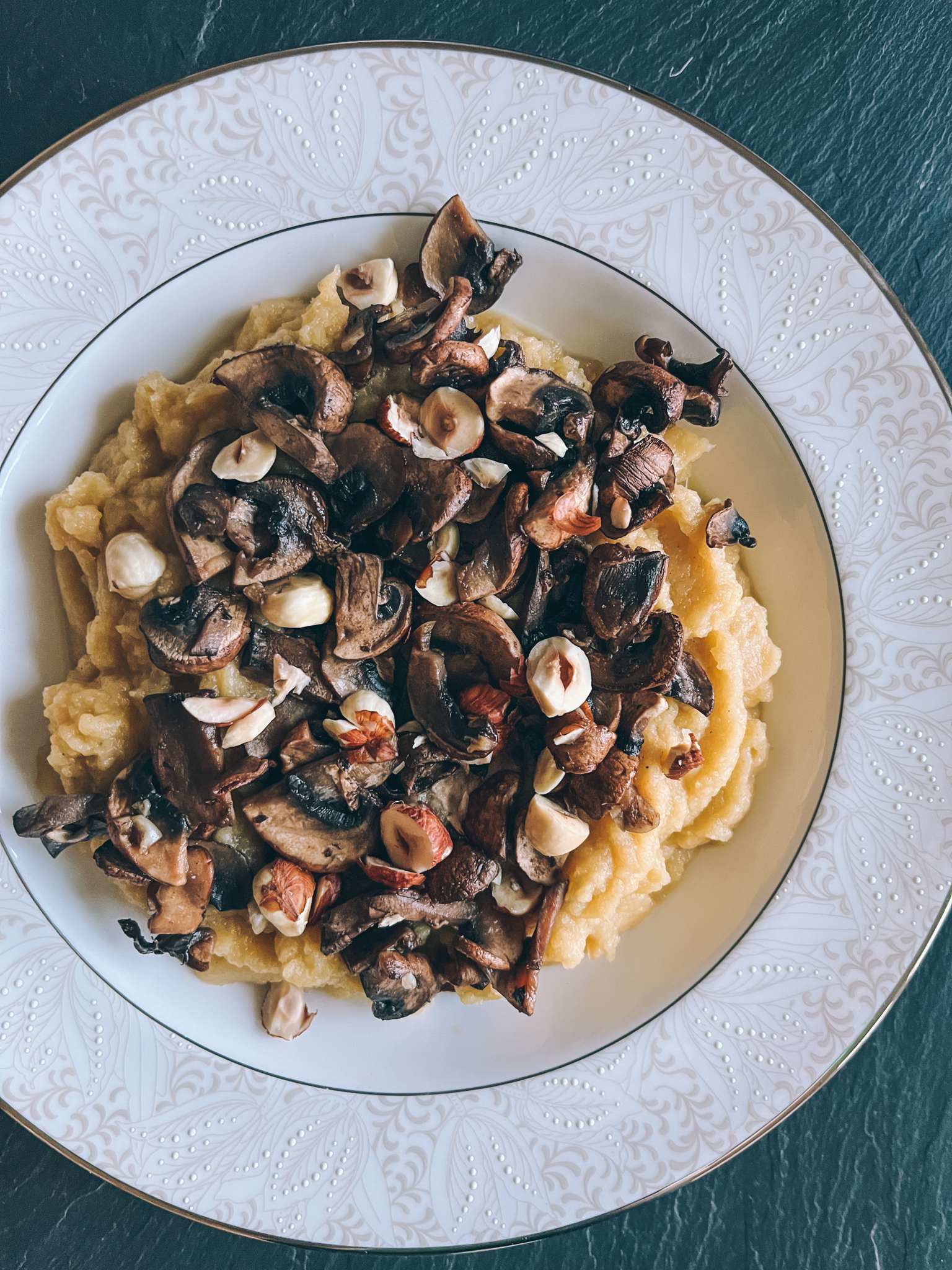
Creamy Rutabaga (Swede) Mash with Mushrooms, Sage + Hazelnuts

For the past couple months, I’ve been cooking and taking a lot of inspiration from Gill Meller’s Root, Stem, Leaf, Flower cookbook. I say “cooking” but I rarely cook the recipes as written. Instead, I’ve learned my own energetics and the energetics of the season, and I adjust ingredients and amounts accordingly. Or the recipe technique doesn’t seem quite what I’m looking for and I adjust it somehow.

This is the type of cooking and eating that is the goal for all the individuals I work with in the nutrition clinic, but admittedly, it can take a long time to get there when one’s intuition is overwhelmed by inflammation, chronic pain, nutrition and food confusion, etc.

But back to the cookbook – Root, Stem, Leaf, Flower has been my favorite inspiration to cook from for the past few years. It’s hyper seasonal with produce common of the climate I live in, exceptionally British (meaning the seasonings and ingredients are very much of the region), and uses simple high quality ingredients in often novel and creative ways. The ingredient lists tend to be short and don’t require much beyond the produce and pantry staples at hand.

This creamy rutabaga mash with mushrooms is one such example of inspiration I took from Gill Meller last year. I first shared and published this recipe locally with a farming and food organization that I served on the board of for the last few years, the Willamette Farm & Food Coalition (WFFC).

Each year, WFFC publishes what is called the Locally Grown Guide, a printed and online directory of all the local food resources: farms, farm stands, CSA’s, grocery stores that stock local, and the like. This recipe first appeared in the 2023 edition of the Locally Grown Guide, but since we’re gearing up for a 2024 release (with new inspiration within the pages), I want to share the recipe here.

Plus this combo of creamy mashed rutabagas (also called Swede), mushrooms, sage and hazelnuts is incredibly tasty. It’s a true comfort dish using local–to Western Oregon as well as the UK–fall and winter ingredients. And it’s a good one for mid to late winter, when our ideas for novel and healthful (and seasonal) eating tend to wear out.

As you’ll see, this recipe is either a side-dish or a meatless “main component,” and it will need a protein on the side to balance out the meal. Even though many vegetarians tend to recommend mushrooms as an alternative to a protein source (and they do contain some protein), I don’t recommend just eating this on it’s own–most individuals will benefit from 20 to 35 grams of protein for main meals during the day–so pair it with a side of sauteed or baked tempeh, stewed and sage-ey garbanzos, or your choice of animal-based protein on the side. Another option is to pair it with a simple and delicious pot of lentils.

P.S. Lentils have been my often go-to the last few months. If you follow me on Instagram or read my newsletter, you’ll know why I’ve had them on repeat. :)

Creamy Rutabaga Mash with Mushrooms, Sage + Hazelnuts
inspired and adapted from Root Stem Leaf Flower by Gill Meller

Prep:  10-15 minutes  | Cook: 40 minutes  | Serves: 4

1 large ~ 1 ½ lb. (600 gr) rutabaga, peeled and chopped
1 Tbs. ghee or butter
8-12 fresh sage leaves
½ tsp. mineral salt, divided
⅛ tsp. ground black pepper
1 Tbs. olive oil or ghee
2 garlic cloves, minced
1 pound (450 gr) mushrooms, thickly sliced
A small handful of toasted hazelnuts, roughly chopped

  1. Place the chopped rutabaga in a medium pot and cover with water. Bring to a boil, then turn down to a simmer and cook for 25-35 minutes, until the pieces are completely soft when pierced.
  2. Drain the rutabaga with a colander, then transfer to a food processor or a blender. Add the butter or ghee, ¼ tsp. salt, about four small sage leaves, and black pepper. Puree until smooth, adding a splash of water if it is too dry. Set aside and keep warm. 
  3. Mince the remaining sage leaves. 
  4. Then heat the remaining olive oil or ghee in a large saute pan and bring to medium-high heat. Add the sliced mushrooms. remaining ¼ tsp. salt, minced sage leaves, and garlic. Cook the mushrooms for about 6-8 minutes, until they are tender, dark, and the moisture has cooked off. Then stir in the chopped hazelnuts and give it all a good stir. 
  5. To serve, spoon the rutabaga puree onto plates and top with the mushroom and hazelnut mixture. 

Notes:
– Rutabagas, which are also called swede in some countries, are truly underrated but you can swap them out for nearly any other root vegetable for a variation.
– Rutabaga belongs to the same family as broccoli and has compounds called glucosinolates, which can help with liver detoxification and can help
prevent conditions like heart disease and cancer. Hint: it looks like a large turnip but the interior flesh is more yellow.