
As it turns out, I am a giant nerd. I’ll gladly take an evening in with a good book just about any day. I take books to all family gatherings and long road trips. I have no problem sitting in a room full of people, disengaged from the small talk, reading. Like a true nerd, I love libraries and bookstores, and of course, good old-fashioned books.
Nerdism started early but back when I learned to read, I was a slow learner and had to go to Mrs. Ashcraft’s for special reading class. After Mrs. Ashcraft worked her magic, I was reading giant chapter books far beyond my grade level in a matter of weeks. To this day, reading is among my favorite pastimes. I still have little girl Jane Austen fantasies about long afternoons in the parlor with all my best gal pals reading and eating tea cakes. The one time this came even close to happening was last year in Victoria with William. We stayed at a B&B with a serious library, complete with fireplace, cozy chairs, a pot of English tea, and a good book. Those quiet mornings in the library were magical.
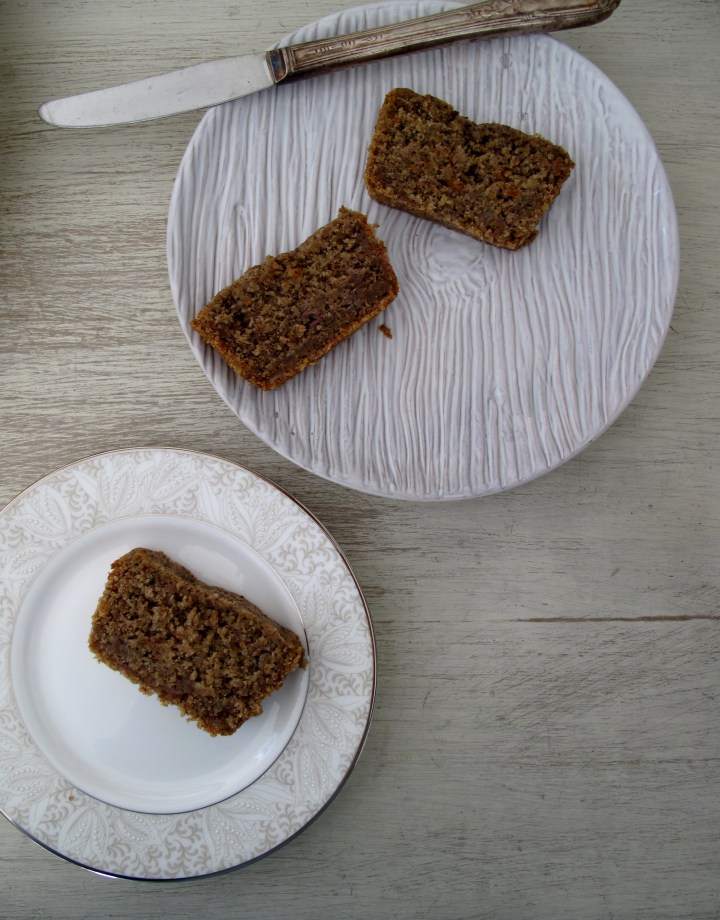
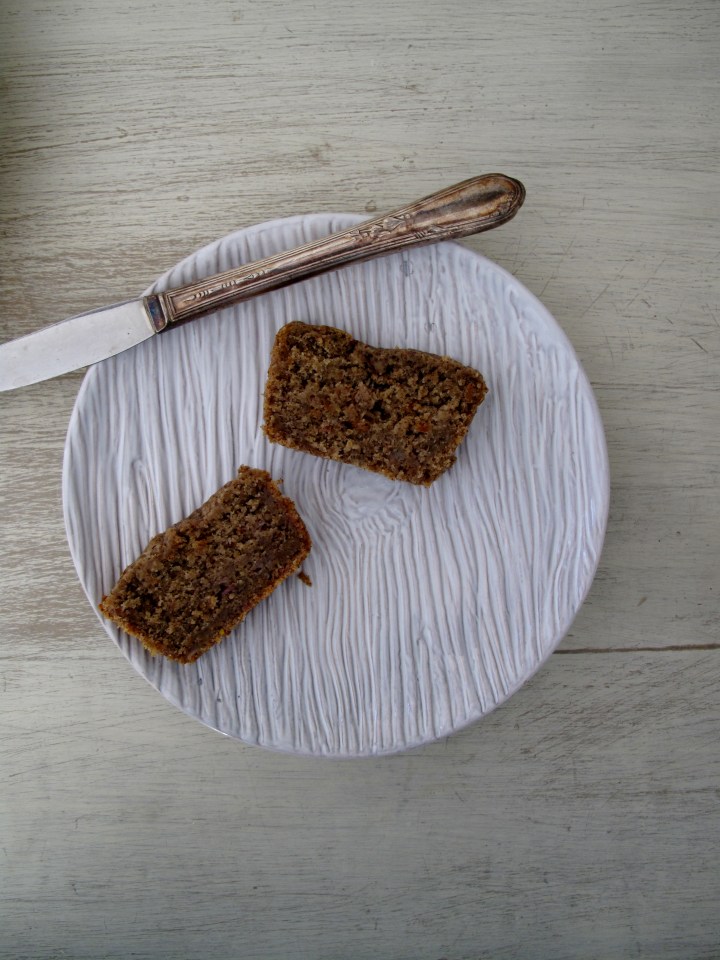
Back in reality, I’m often asked if I like to read. Though I’m open about my interest in books, I often share only the lighter things I’m reading when people ask–and it is a rare day when I snag more than 10 minutes or so at a time with a book. Since The Recipe Redux theme for this month is quick bread and I can think of no better time to enjoy a slice or two than on a slow weekend with tea and reading materials, I’m sharing all the good books I particularly enjoyed in the past year. If you are in need of a new one to read or cook from, or need gifting ideas for the holidays, read on. Or skip to making these smoky pear tea cakes and enjoy a slice over something from your own selection.
Non-Fiction
When Women Were Birds: Fifty-four Variations on Voice, Terry Tempest Williams
This is the book I’ll gift to my former English-major friends. It is a memoir on Williams’ experience with her mother’s death and the resulting discovery of finding her voice. Of all the books in this list, it is the most beautiful and capturing to read.
Me and My Mate Jeffrey, Niall Breslin
Written by former professional rugby player and singer, Niall tells of his struggle with extreme anxiety disorder, how he kept the panic attacks and chronic insomnia a secret for 15 years, how it led him to give up on several careers, and ultimately to become a spokesperson leading the way for the discussion of mental health to be less stigmatized in our society. I can identify with much of Breslin’s mental struggles (though not how they present themselves) and his finding of endurance athletics and mindfulness to manage them. I can’t wait to see what happens when we as a society let go of the shame surrounding this topic and address it as we do other areas of health. I highly recommend this book to just about everyone.
The Five Elements of Self-Healing: Using Chinese Medicine for Maximum Immunity, Wellness, and Health, Jason Elias
I picked this one up at the library randomly and I’m glad I did. This book focuses heavily on addressing health from the standpoint of whichever Chinese Medicine element an individual identifies with most strongly. It also gives tools to balance oneself and delves deep into many common illnesses, starting with the most exterior (cold and flu) and moving to the most interior (diabetes and cancer). I’m super fascinated with Traditional Chinese Medicine and this was an easy to understand book that I will refer to again.
Between Heaven and Earth, Harriet Beinfield and The Web That Has No Weaver, Ted Kaptchuk
Both Between Heaven and Earth and The Web That Has No Weaver are great introductory texts that explain Traditional Chinese Medicine and bridge the gap between eastern and western medicine. I really enjoyed Between Heaven and Earth and am still making my way through The Web, but am adding it to the list anyway because I often find myself taking copious notes from it. I would definitely consider purchasing either of them to use as a reference when life gets chaotic.
Eating on the Wild Side, Jo Robinson
The premise of Eating on the Wild Side is that our modern foods have lost the rich nutrient content of their wild ancestors–and few of us are going to go gather wild herbs to eat every day to make up the difference. Instead, Robinson provides an exceptional resource on the most nutritious varieties of common fruits and vegetables, including how best to store and prepare them to ensure as many nutrients as possible actually arrive to our bodies. I took this book to work and made a handout for parents in our programs. My co-worker, who teachs a preschool parent-child health and nutrition class, says this is the number one handout that parents ask for and repeatedly refer to.
Lentil Underground, Liz Carlisle
This book is about a group of renegade farmers in Montana who eschewed the norms and started an organic lentil and bean farming revolution in an area that was typically conventional dryland wheat. I was able to listen to Liz Carlisle in person, as she and the farmer, David Oien, presented at my university a few months ago. The number one thing that stood out to me from this story was the sheer amount of work–double decade long lifework–that comes with eschewing the norm and following your dream. If you are at all interested in the food movement and sustainable farming systems, this is definitely one worth reading.
Running With Joy, Ryan Hall
I own this book and refer to it often for spiritual guidance. Essentially, it is Ryan Hall’s daily training journal as he prepared for the 2010 Boston Marathon. For me, it reads as a runner’s daily devotional. It’s a good one for gaining perspective on finding joy both in running and in life.
Fiction
Skippy Dies, Paul Murray
When it comes to fiction, I often look to the award winners and the books that are short-listed. This one is a weighty novel (600+ pages) about a boy at a Catholic boarding school. The title gives away what happens and Skippy dies right away within the first chapter. This is a captivating journey into the world of teenagers, drawing the reader into their often nonsensical thinking patterns and how the opposite sex can become an all-consuming obsession. Rife with humor, drama, backstabbing, teenage confusion, mental health problems, and of course death, this book reminded me of both what it was like to be a teenager, and how the teens I work with often view the world from a very different lens than my own. And finally–this book is exceptionally well written. Murray has a special kind of voice as only the most gifted writers do.
The Master, Colm Tóibín
Tóibín is an exceptionally talented writer and this novel is about the famous novelist, Henry James. I loved the imagery that took me into James’ life, and Tóibín was able to make the seemingly drab doings of a writer come alive. I also learned an amazing tactic both to navigate uncomfortable social settings and to view life as a writer does. If you haven’t read this or any of Tóibín’s other novels, I highly recommend him. His books are gold.
Ella Enchanted, Gail Carson Levine
One of my favorite pre-teen stories, I reread this one recently (again) and as always, loved it just as much as my 11-year-old self. This fun and easy remake of the Cinderella Story is actually a good one and is FAR better than the horrible movie that was made out of it.
Cookbooks
Green Kitchen Travels, David Frenkiel
Written by Swedish and Danish couple David and Luise of the lovely blog, Green Kitchen Stories, this is the cookbook that most aligns with my style of cooking. Sometimes simple and easy, sometimes off-the-wall combinations of textures, ingredients and flavors, and often vividly colored. I have been cooking through this all year long. I like it even better than their first cookbook and refer to it often for both inspiration and to make recipes as-written. A word about their diet: David is vegetarian, Luise is health-minded. Together, they share recipes that are always both but can contain dairy, eggs, and gluten, but often do not. I find it super easy to sub these ingredients and have loved nearly every recipe I’ve tried.
Ard Bia Cookbook, Aoibheann MacNamara
This book, titled after its namesake restaurant, is lovely to simply leave on the coffee table because it is so beautifully put together. Whenever I read it, I want to cozy up in a lovely restaurant near the ocean on a dreary day and drink tea and watch the other customers leaf through newspapers and chat about scholarly things. The pantry section is my favorite part and leaves me super happy that a restaurant cookbook provides more than just recipes for meals. There are exotic seed and spice mixtures, infused oils and vinegars, chutneys, and the like.
The Sprouted Kitchen Bowl + Spoon, Sara Forte
I love just about every one of Sara’s bowl recipes, and I’ve tried TONS of them. There is no way I could choose a favorite, but the lentil-stuffed poblano chilies over a butternut mash which I had recently was particularly good. Sara cooks with a vegetable-heavy hand and when she includes cheese, it is often as topping and is never missed by us.
Whole Grain Mornings, Megan Gordon
This is a lovely brunch book that I’ve checked out from my local library for several months (more than once). I love the sheer variety of breakfasty options all arranged by season, and the fact that 90% of the recipes can instead be eaten either as dessert or dinner. If for no other reason, Megan’s recipes for granola are the BEST, which should hardly be surprising as she founded a granola business.
What good book are you reading? I always need more inspiration.
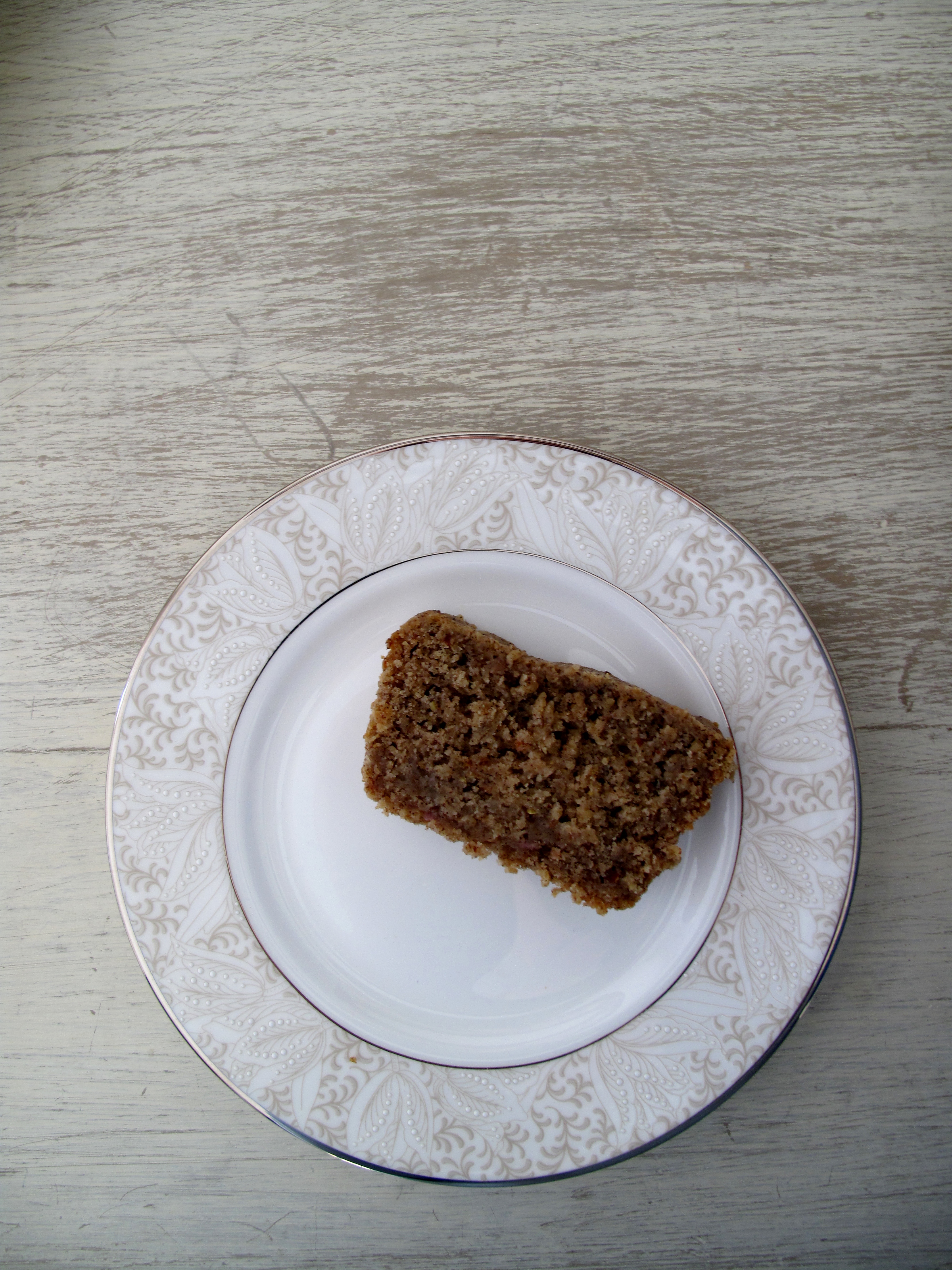
Smoky Pear Tea Cakes
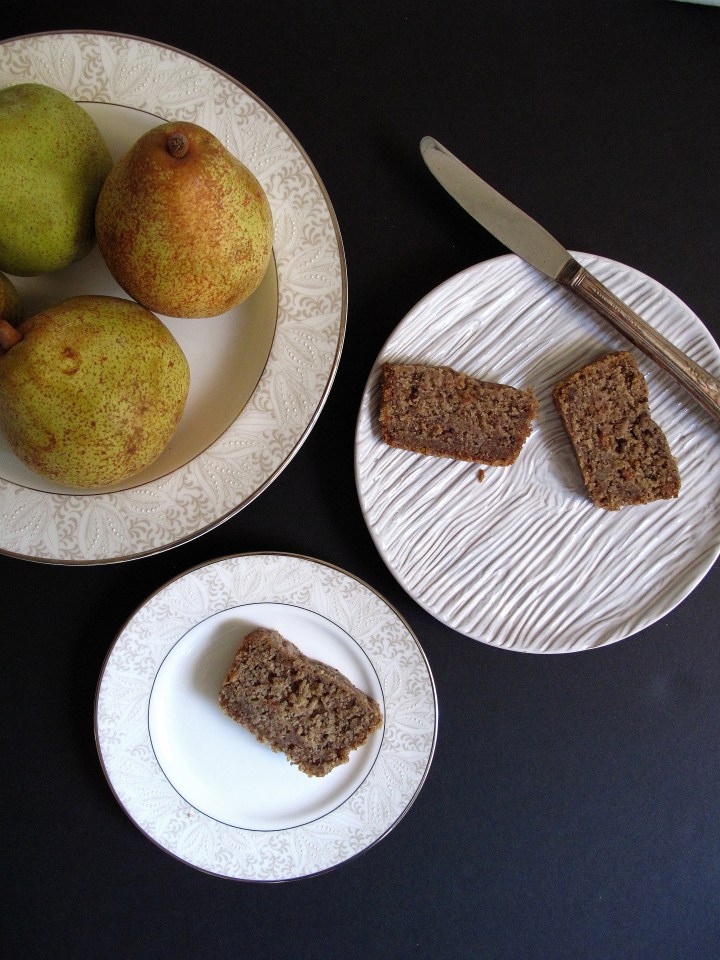
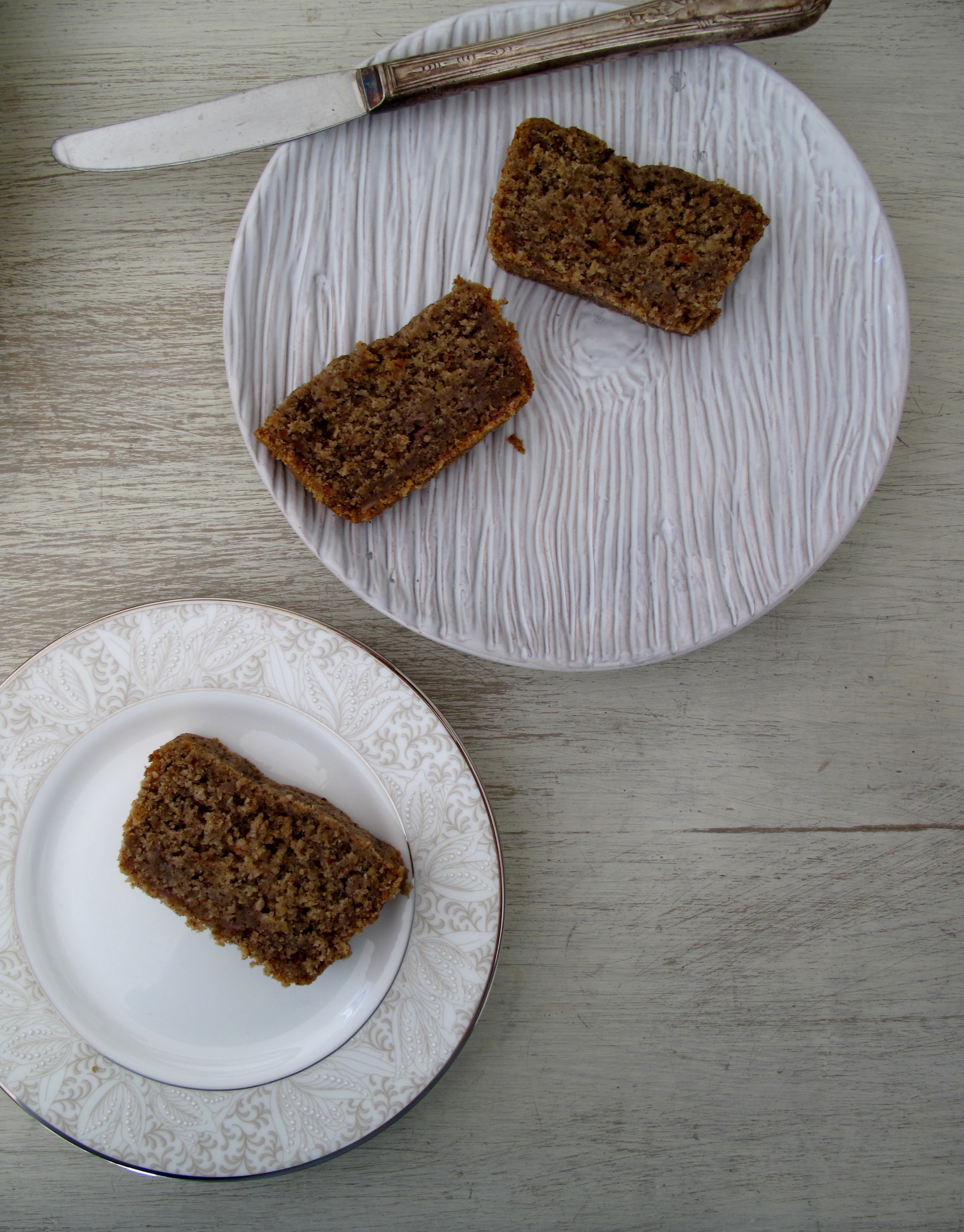
We are enjoying Thanksgiving in eastern Oregon this year with my family. I can’t wait for a long weekend of cozy reading, hugging babies and toddlers, and catching up with the folks and relatives. Plus, I have a whole freezer of not quite good enough versions of this cake to hand over to my sugar-loving, thinks-he’s-sweets-deprived father, who will gobble it all up in no time. The trick with this cake is to find some good quality Lipsang Souchong tea which has a smoky flavor due to the leaves being dried over a fire. The pairing of the smoky tea and soft, ripe pears is subtle but prominent, especially when slightly warm. The smoke and sweet combo captures this time in the season perfectly.
1 cup + ~2 Tbs. boiling water
4 tsp. Lipsang Souchong tea leaves
2 Tbs. ground flax seed
6 Tbs. hot water
3/4 cup oat bran, certified gluten-free
1 1/2 cups gluten-free flour mix or flour of choice
3/4 tsp. baking soda
2 tsp. baking powder
3/4 tsp. salt
1 1/2 cups cored and shredded soft pears (~ 2 medium)
1/2 cup honey
1/3 cup canola oil
1 Tbs. pure vanilla extract
- Preheat the oven to 350 degrees F. Oil and flour four mini-loaf pans or one 9×5-inch loaf pan.
- Bring about 1 1/2 cups water to a boil. Pour slightly more than 1 cup of it over the tea leaves and allow them to steep for a while.
- In a small dish, whisk together the remaining 6 Tbs. hot water and ground flax seeds. Set aside to form a thick slurry.
- In a large bowl, combine the oat bran, flour, baking soda, baking powder, and salt. Mix well and set aside.
- Grate the pears using the large holes of a box grater. Don’t include the core and seeds.
- Strain the tea and pour 1 cup of it into a liquid measuring cup. Add the honey, oil, vanilla, pears, and flax mixture. Mix it all together thoroughly.
- Pour the liquids into the dry mixture and stir the batter until just combined.
- Fill the loaf pans equally and bake until a toothpick comes out clean, about 35-40 minutes for mini loaves or 50-60 minutes for a large loaf.








 GUTSy Performance Nutrition