

I have a weekly ritual of taking a walk around our neighborhood on Mondays, a day that’s typically reserved for no other activity – my rest day from running. The walks serve many purposes because I find it super helpful to do some form of easy, short activity to help me recover better from the previous week’s training load. And the slow walk is a break from work, a time to slow down and notice in more detail the subtle seasonal shifts that are continuously happening all around us. Plus, some of my neighbors tend to put up humorous and light hearted seasonal décor, or I’ll stop and have a little chat with a couple neighbors if they’re out and about. It’s always a win win.
But I also sometimes dread those Monday walks. It’s frequently cold. It’s frequently rainy. It’s frequently windy. And sometimes I love them and the sun shines, like yesterday.
When I can, I enjoy the walks even more when I can convince William to go with me. He often works from home on Mondays and the walk together becomes an especially nice work break.
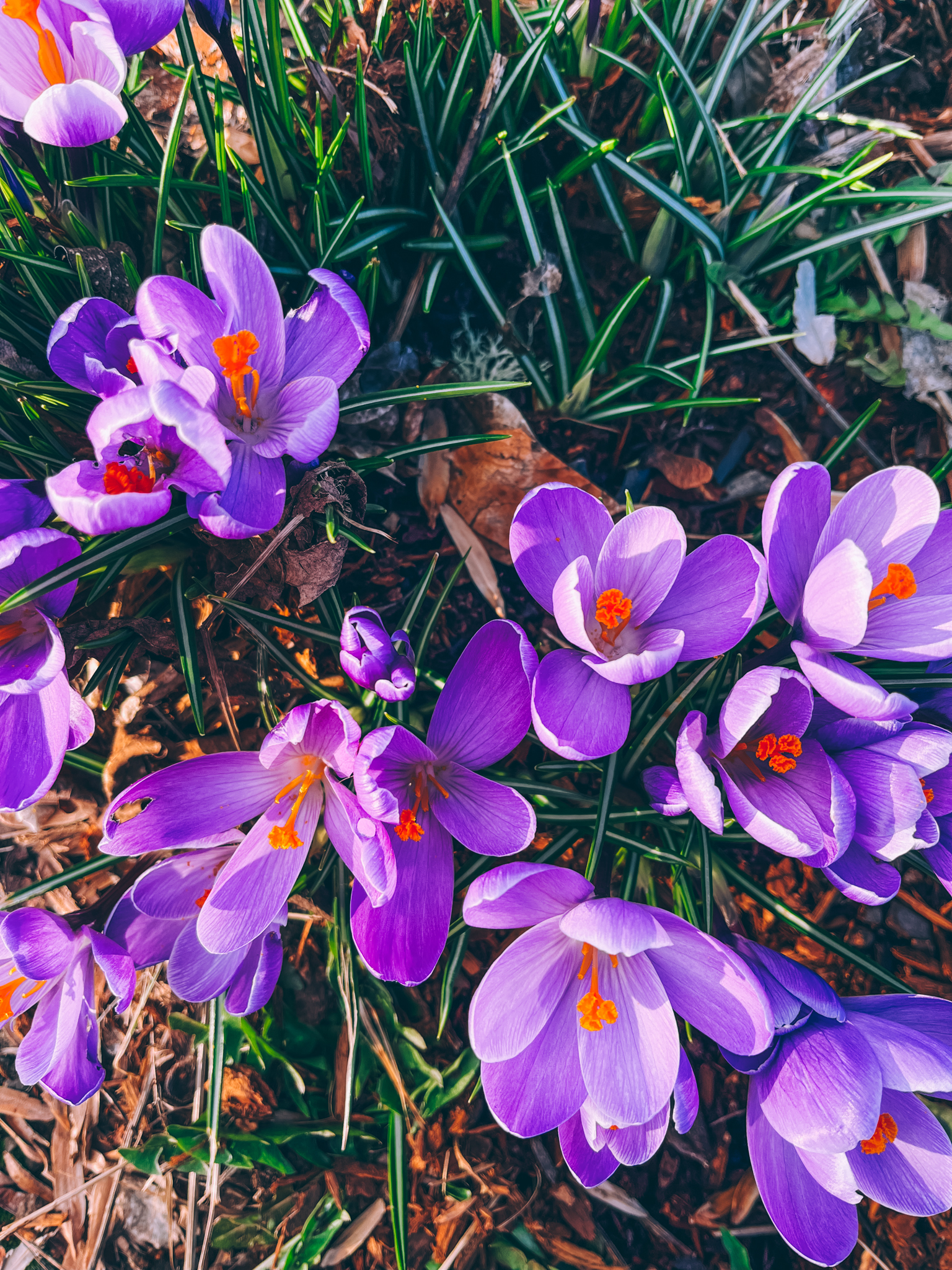
Yesterday, I was reflecting on how many more flowers have arrived in just a handful of days here locally. The crocuses, the daffodils, the red flowering currant outside our dining room window, and now the first starts of tree blooms. After a long, cold and continuously snowy winter, we all need the bright bursts of coming flowers.
When it comes to eating, this time of year can feel like a chore for many of us too. Your digestion might have slowed down, where everything feels heavy and meals just sit there in your GI. There’s a lot of dampness in the air and that, combined with heavy winter meals can lead to a lot of congestion, mucus, and that heaviness and sluggishness – maybe even an energy crash – after eating. Or maybe you just have no appetite and everything sounds meh.
The first flowers can tell us, it’s time to shift with the season, towards more bitter foods – the brassicas, spring greens, onions and garlic, fresh ginger, black pepper, a pinch of chili flakes to get things moving, and generally more vegetables.
If you’d like inspiration that’s not too green and herbaceous, try out this seasonal pasta. As written, it will need a good quality protein to round out your meal – I’d choose a nice grilled white fish – but you can also make it completely plant-based by adding chickpeas or a chickpea/lentil-based noodle. Chickpeas are also one of the most drying beans – which can make them excellent this time of year for many people. I hope you enjoy – and happy spring!
Creamy Cauliflower and Fennel Fettuccine
Prep: 15 minutes | Cook: 20-30 minutes | Serves: 4
2 Tbs. olive oil, divided
¼ cup breadcrumbs (gluten-free as needed)
Optional: ¼ tsp. red pepper flakes
¼ cup parsley, minced
½ tsp. mineral salt
pinch of black pepper
1 tsp. fennel seeds
½ a large onion, thinly sliced
2 cloves garlic, minced
1 small head cauliflower, chopped
1 bulb fennel, cored and chopped
¼ cup raw cashews, chopped
1 ½ cups water, divided
8 oz. brown rice fettuccine noodles
- Heat a skillet over medium high heat. Add 2 tsp. of the olive oil, a pinch of red pepper flakes, and the breadcrumbs. Stir constantly until breadcrumbs are golden.
- Transfer the breadcrumb mixture to a bowl and stir in the parsley. Set aside.
- Add 2 tsp. of olive oil to the same skillet and heat over medium heat. Add salt, pepper, and fennel seeds and heat until the aroma from the seeds comes up. Then stir in the onion and cook until soft, about 8-10 minutes. Add the garlic and cook for 1 minute.
- When the onion and garlic are soft, remove half of the mixture to a bowl and set it aside.
- In the skillet, add the cauliflower and 1/2 cup of water to the remaining onion and garlic mixture. Cook, covered, for about 5 minutes, until the cauliflower is soft.
- When the cauliflower is cooked, transfer the mixture to a blender. Add the cashews, 1/4 cup water, pinch of red pepper flakes, and the remaining olive oil. Blend until smooth and creamy. Then set aside.
- Put the onion and garlic that was set aside back in the skillet, along with the chopped fennel. Over medium heat, sear the fennel for 2-3 minutes on each side. Then add the remaining 3/4 cup of water, stir, cover, and cook until tender and soft, about 20 minutes.
- Meanwhile, bring a pot of water to a boil and cook pasta according to package instructions. Drain pasta but reserve about 1/4 cup of pasta water.
- Add the pasta back to the pot along with a couple tablespoons of pasta water. Toss to coat, then add in cauliflower puree, along with the braised fennel mixture. Stir to mix.
- Divide the pasta into bowls and top with the breadcrumb mixture and a pinch of minced fennel fronds if you have them.
- Serve with a healthy protein, such as grilled fish, or swap the brown rice fettuccine for a lentil/chickpea based pasta to make this a balanced meal.


 GUTSy Performance Nutrition