Blog

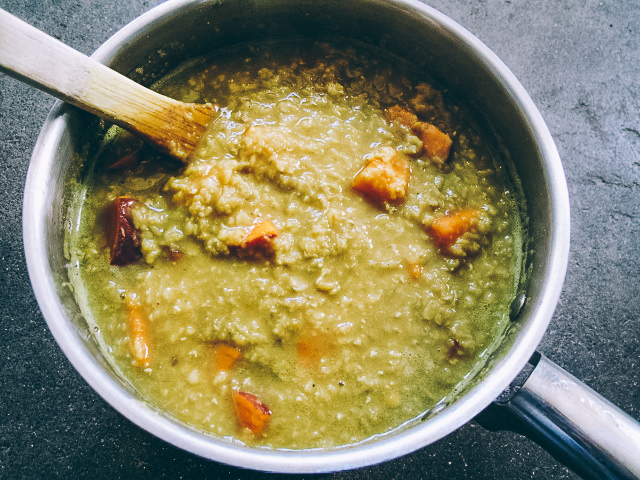
Gingered Sweet Potato Dal + tips for better digestion

Every few months or when I notice a trend in increased GI upset, not digesting foods or absorbing nutrients properly, I strip my meals way back to simplicity so most of the hard work is done for me (in the cooking process). With the turn from late summer into fall, I noticed an uptick in the above symptoms, and since this tends to fall in a pattern each year, I decided to make the last last few weeks about eating primarily very simple, easy to digest meals. Conveniently, and also not so conveniently, these simple meals tend to be needed more as running mileage goes up – which also means less cooking time, planning and prep! If you’re busy and having trouble with digestion — or just enjoy easy, dreamy meals this time of year, the recipe below is one to add to your rotation.

Taking from Ayurvedic medicine, which has much to offer in terms of treating and preventing just the type of malabsorption and upset I tend to experience, I chose to make meal-in-a-pot dishes such as kitchari and lots of dal. Kitchari is a rice and lentil or split mung bean combination that’s perfect for these occasions. Dal, in my opinion may even be more so, as it often eliminates the grain component for even easier food break-down and assimilation.

Plus it’s incredibly delicious on a cold, blustery fall or winter day. And with the addition of sweet potato or other root vegetables, it’s still hearty and fulfilling like kitchari.
The classic dal that I make features red lentils, which I find to be the most digestible bean/legume there is, other than split mung beans, which can be difficult to track down. Red lentils break down and cook quickly, and they don’t usually need soaking or planning ahead. However, if one is already having tummy troubles, soaking is still a good idea. Here are a few more tips to help make lentils and beans more digestible:

– Soak and rinse in a big bowl of water, ideally for a few hours. Discard the soaking water before using the lentils in your recipe.

– If there is foam that rises to the top of the pot while cooking, skim it off. The foam contains a type of protein that is hard on our digestive system. When in nutrition school, my cooking instructor Eleonora constantly repeated, ‘skim your beans’ so often that that’s the one line I associate most with her!

– Make sure the lentils – or other beans – are cooked thoroughly. This means they are soft, not al dente. One of the biggest problems with canned beans, in my opinion, is that most of them are not actually cooked as well as they should be for proper digestion. Cooking until the lentils or beans begin to break apart, or in the case of red lentils, turn into mush completely, is the best way to know they’re done.

– Add spices! Carminative spices, meaning they boost the digestive capacity, is a long-held way in traditional cooking to make meals more digestible. This is why a big soup pot with beans and meat often contains a bay leaf. Other carminative spices include ginger, cumin, coriander, fennel seed, thyme, rosemary, oregano, basil, allspice, black pepper, cardamom, cloves, and more. Virtually every cuisine of the world is ripe with carminatives in the traditional recipes for the exact purpose of not only adding flavor, but also boosting digestion!

– Add a squeeze of lemon, lime juice, or vinegar. Ideally every meal contains a slightly sour flavor addition, since sour helps to activate digestive enzymes. Most meals don’t need to taste outright sour, however. A little addition at the end of cooking goes a long way and often balances the recipe that’s missing ‘just a little something.’

– Lastly, eat your foods warm, especially this time of year. If you think of an ideal digestive scenario as a nice little cozy fire in the digestive system, eating cold foods is like throwing cold water on it. Not so great for turning food into nutrients and energy! In the summer months when we can be overheated, eating cold and raw meals makes much more sense and is seasonally appropriate. But this is rarely the case as we turn into fall and winter.


One other little tip that I find incredibly helpful is to reduce stimulus, particularly around meal time, but perhaps throughout the day too to help rebalance digestion. Constantly checking our phones and computers, keeping up with what everyone else is doing while they’re avoiding being present themselves, and eating in a loud, overstimulated environment or while upset or anxious is a recipe for continued GI problems. Our gut and brain are incredibly closely linked. We can go a long way to improve tolerance to the foods we eat just by eating slowly, chewing each bite upwards of 30 times (yes, really!), and not doing anything else while eating, other than eating. If you try these tips, you might also find you enjoy your food more, which is always an added bonus.

Now, onto the dal!


Gingered Sweet Potato Dal, serves 3-4
adapted from Everyday Ayurveda Cooking for a Calm, Clear Mind by Kate O’Donnell
Recipe Updated: December 2021

Use the larger amount of coconut oil if you tend to have dry skin, variable hunger, feel often bloated, gassy, or constipated, and less if you tend to accumulate extra congestion, have oily skin, and slow metabolism.

1-2 Tbs. coconut oil
1 tsp. salt
pinch of black pepper
1 tsp. ground coriander
½ tsp. ground cumin
½ tsp. ground turmeric
½ tsp. cinnamon, optional but delicious
1/8 tsp. fennel seeds
1 3-inch piece of ginger, finely grated
1 cup red lentils
4-5 cups water
1 large sweet potato or 2 medium, peeled and diced small
1-2 large handfuls of dark leafy greens, such as spinach, arugula, or kale
salt and freshly ground black pepper to taste
a squeeze or two of fresh lemon or lime juice

  • Warm the coconut oil in a large pot over medium heat. Add the spices including fresh grated ginger, and stir just until they start to smell.
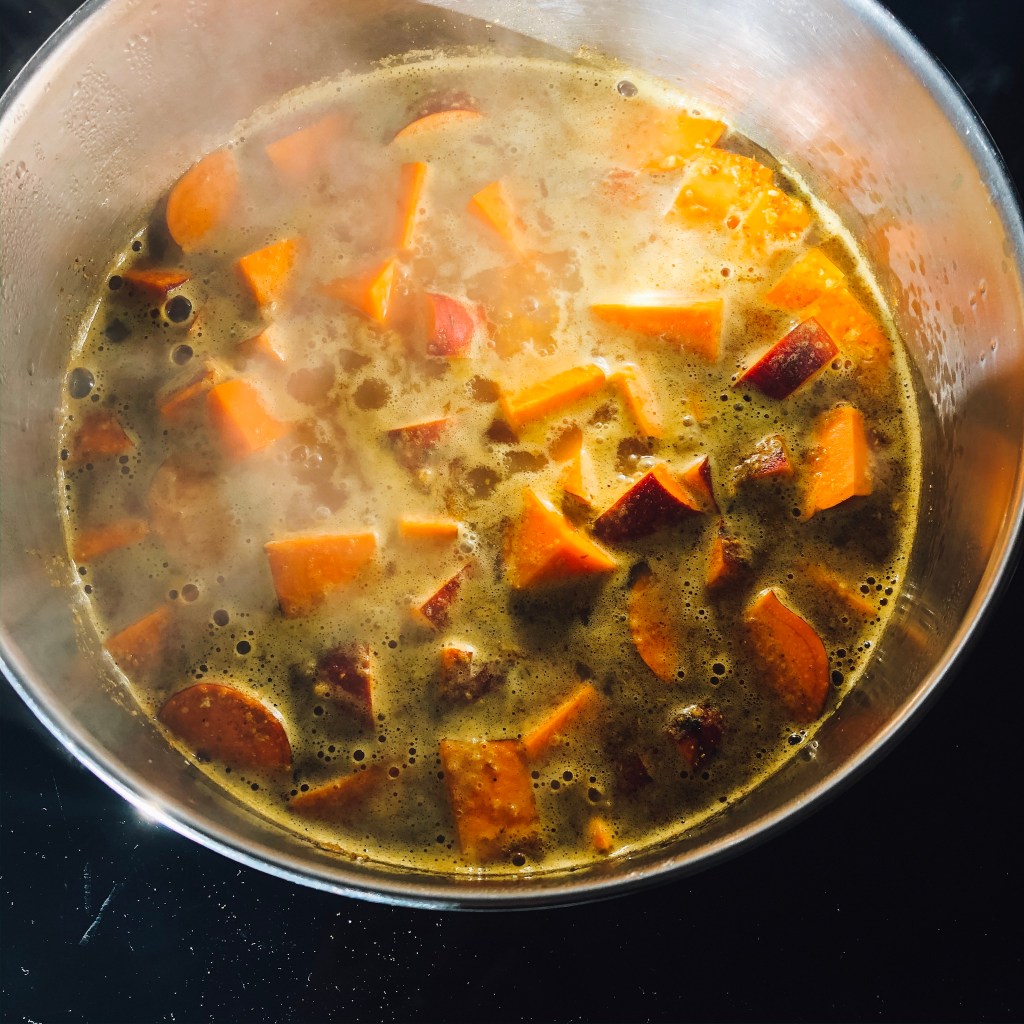
  • Add the lentils and sauté for 1-2 minutes, making sure they’re nicely coated. Then add the water and diced sweet potato. Bring to a boil, then turn down and simmer until the mixture is creamy and soupy, about 20 to 30 minutes. Stir occasionally. The lentils will be broken down, making a nice porridge-like consistency. Add more water if you need to.
  • Near the end of the cooking time, stir in the greens and a squeeze of citrus. Cook until the greens have just wilted and are incorporated in. Remove from the heat and enjoy!

Celiac Disease, Gluten Sensitivity and Wheat Allergy: what’s the difference and what are the concerns?

I remember the beginning nearly exactly. Lower GI pain that began in the afternoon, dull enough at first I tried to ignore it, and would only go away after eating dinner, coming back at nearly the same time the next day without any apparent linkage to what I had eaten. I was in the first month of my one-year graduate program for teaching at the time, age 22. I was otherwise healthy and relatively stress-free. Over the next two and a half years, without doing anything about it, the pain intensified and some days was nearly constant.

And I developed more symptoms, many of them far beyond my GI system.

After the first couple hour-long meeting with my doctor, a naturopath, she told me she highly suspected what was going on, but we’d confirm with further testing. It was nearly Thanksgiving then and some of my symptoms were overwhelming anxiety, daily headaches, acne that was far worse than I ever had as a teen, and a nearly complete inability to concentrate. Having formerly struggled with an eating disorder, I was weary of having restrictions in what I ate. Plus, I was making incredibly delicious homemade bread and pastries regularly and I didn’t enjoy the idea of changing that. So I pushed the testing off, dug in my heels, and waited to confirm or change anything until after the holidays. What we confirmed was that I was significantly depleted in nutrients despite eating normally, and highly reacting to gluten. In addition to those other symptoms above, test results also showed a bunch of the wrong type of bacteria hanging out in my system, further contributing to my complete sense of not-at-all-wellbeing. At the time I had many other life events happening with tight finances, job/career uncertainty, and an upcoming wedding halfway planned–so I didn’t push for further testing or a celiac disease biopsy like I should have. Instead, I grudgingly and not altogether stringently, took out gluten from my diet with the knowledge I had.

I felt better very very slowly, but after six months, I was only better enough to know I was still reacting to more than gluten. So we tested again and found more problem foods.

Celiac Disease

Celiac Disease is an autoimmune condition characterized by damage or destruction of the villi in the small intestine resulting in malabsorption of nutrients and widespread pathophysiological symptoms throughout the digestive tract and often in other areas of the body (1, 2)

The only current long-term treatment to successfully stop the autoimmune response that occurs in celiac disease is to strictly adhere to a life-long gluten free diet. This includes avoiding wheat and its relatives (spelt, kamut, emmer, einkorn, triticale, etc.), barley, rye, and in some individuals, oats (3). In celiac disease, the inflammatory response invoked by the gluten proteins leads to destruction of enterocytes, the cells in the small intestine, then atrophy of the intestinal villi, the tiny, fingerlike projections along the small intestine lining that enable nutrient absorption to occur.

The lining of the small intestine is one cell thick, and these cells are semi-permeable, which allows for tiny molecules of nutrients to pass through into the bloodstream. The cells of the gut lining are also joined together by what are known as tight junctions, which are supposed to be tight, but damage can cause larger particles to slip through. When the body negatively reacts to gluten proteins, chemicals that are released in their presence causes the lining of the small intestine to become much more permeable, and substances that normally would not be allowed to pass through now can, causing even more inflammation.

When the area of the body that is responsible for nutrient absorption is so critically damaged, decreased nutrient absorption quickly follows. Likewise, the immune complexes attacking the small intestine don’t just stay there. They travel throughout the body and can damage other organ systems, which is why it is common to see symptoms that are far beyond the gut in those negatively responding to gluten, such as depression or anxiety, headaches or migraines, joint and muscle pain or weakness, skin conditions, fatigue, infertility or repeat miscarriages, frequent bruising, brain fog or difficulty concentrating, osteoporosis, tooth enamel damage, canker sores, and many more associated with lack of adequate nutrients. Lastly, if not diagnosed, or one does not adhere to a strict gluten-free diet, those with celiac disease are at much more risk for developing secondary autoimmune and other diseases, such as cancer.  

When gluten is no longer triggering the immune system, the enterocytes and then villi can begin to heal (3). The goal in implementing a strict gluten free diet is to heal the gut lining so nutrient depletion and widespread symptoms stop occurring. After just one meal containing gluten, symptoms can appear for up to six months in those with celiac disease, which makes paying close attention to cross contamination, and educating friends and family who prepare meals a primary concern. So too is being particularly careful about eating out at restaurants that pay strict attention to cross contamination, or that don’t prepare any food with gluten, which is rare but a real haven for those that need to avoid it.

Gluten Intolerance

Beyond celiac disease, there is the slightly more common gluten sensitivity (also called gluten intolerance), which often displays the same or similar symptoms as celiac disease, but does not cause intestinal damage, often will not take as long for healing and symptom remission to occur, and is not always lifelong. Gluten sensitivity also is not autoimmune, and does not appear to have a genetic linkage. When enough healing has occurred in one that is gluten sensitive but does not have celiac, the individual can often reintroduce gluten in small amounts and/or return to eating it normally.

The one caveat in determining between lifelong strict avoidance of gluten for those with celiac disease, and perhaps less stringency with those with gluten sensitivity, is that the only way to definitely diagnose those with celiac disease is with an intestinal biopsy, and damage will only be ‘complete’ enough to diagnose with daily consumption of gluten for at least six months. I had an unfortunate episode a couple years after I removed gluten in which I unknowingly was eating contaminated oatmeal every day for a month. After realizing and removing it, it still took me over six months to be symptom-free, and that very small amount of gluten daily for about 30 days was nowhere near enough gluten to be able to diagnose. So if one suspects gluten is a problem, I always recommend ruling out celiac disease before completely removing gluten from the diet.

Wheat Allergy

Now, for a slightly different but similar condition—wheat allergy.
Those with wheat allergy have developed an antibody to a particular structure in wheat. Similar to a peanut allergy, symptoms can occur immediately after eating, up to within two hours later, and include swelling, itching or irritation of the mouth or throat, itching, hives, or skin rash, itchy watery eyes, GI concerns such as diarrhea, cramps, nausea, vomiting, difficulty breathing, chronic hay fever, heart palpitations, etc. Like other food allergies that cause similar reactions, even a trace of the food allergen can trigger a severe reaction, and the way your body reacts to a food allergen one time does not predict how it will react the next time. So a mild response in the past does not mean the response will always be mild, and vice versa for severe reactions.

Gluten-Free Diet for other Autoimmune Conditions

A question and/or concern that comes up routinely in those that have been diagnosed with other autoimmune conditions is why is a gluten-free diet commonly suggested if one has something like Hashimotos thyroiditis, Lupus, or others?
The answer here is slightly complicated—but the simplest way to describe it is that it is commonly believed that the gluten proteins are highly complex and difficult molecules to break down, and they are mildly inflammatory in most individuals, but highly inflammatory in others. For those individuals that already have an autoimmune response occurring in the body, an immune system that is “on alert” does not need more inflammatory molecules entering the system. That is why many feel better when removing gluten and other inflammatory foods, such as refined sugar, dairy, processed meat, etc., and load up on anti-inflammatory foods to help heal the whole system.

Sourcing Gluten-Free Products

If one does need to avoid gluten and/or wheat, pay particular attention to sourcing, packaging, and labeling of all foods, and in particular grains that might be processed in the same facilities as wheat and other gluten-containing grains. Flours that are certified gluten-free, or that at least say on the label they are not processed on a line that also processes gluten-containing grains is essential –that’s how I got into trouble with the oats! This means purchasing flours and grains from bulk bins needs to be done with care, as well as knowing the source and details of the processors so as to avoid cross-contamination. Edison Grainery (my favorite source currently), Arrowhead Mills, Bob’s Red Mill (which has two lines so pay attention to whether food is from the gluten-free line!), and One Degree Organics are great companies, but there are many more to be found as long as you read the ingredient list, look for a gluten-free certification, and read the small print about allergen cross-contamination.

I hope this informational article clarifies some of the myths and misconceptions about these challenging dietary conditions. Feel free to comment below or contact me with your further questions or for more information on working with me if you or a loved one are concerned about gluten and/or wheat. In addition to my own experience mentioned above, I studied gluten-associated pathophysiologies extensively while in graduate school for clinical nutrition.

References:
1: Lipski, L. (2012). Digestive Wellness (4th ed.). New York, NY: McGraw Hill.
2: Hardy, M.Y. and Tye-Din, J.A. (2016). Coeliac disease: a unique model for investigating broken tolerance in autoimmunity. Clinical and Translational Immunology, 5(11): e112. doi: 10.1038/ct.2016.58.  
3: Barker, J. M., & Liu, E. (2008). Celiac Disease: Pathophysiology, Clinical Manifestations and Associated Autoimmune Conditions. Advances in Pediatrics55, 349–365. http://doi.org/10.1016/j.yapd.2008.07.001.

Beet + Seed Loaf Cake

7BE53C2C-5575-4E52-8049-982FB99A6BDC

I had an instance last weekend that after some consideration, seemed like a metaphor for life right now. I had been planning a creative cake project for William’s birthday and in retrospect I planned the more creative aspects of it, but not so much the logistics of size and weight, how many layers can actually stack before it’s too much. That sort of thing.

After a few hours of baking, as assembly got underway, the cake began breaking apart before me, each layer collapsing in to the next as their weight was too much. In panic, I *tossed* the whole thing in the freezer, hoping it would chill quickly enough to stop the destruction.

IMG_3648-2

And then like the cake, I completely melted down. William who really didn’t care whether he had cake or not, tried to reassure me, but the damn cake falling apart was in that moment an abject failure on my part after toiling away for hours and planning and looking forward to it for weeks.

So I took a break, made some tea and ate a snack because sometimes a blood sugar boost and tea actually is the best remedy before going on.

A little more resolve in my system, and I found a way to salvage two of the four layers, effectively putting the cake back in adequate proportion territory, and still plenty enough for a birthday.

IMG_3661-2

For the artistic frosting finale, I realized the downsizing really put a hamper on how the color scheme / paint-like effect of the frosting was going to end up and at the end, William laughed at the looks of my finished result, although ‘it doesn’t look bad, really‘ were the words that came from him, and ‘just different than what you were going for.’

IMG_3668-2

Different than what I was going for are probably words that describe most things for me. There’s that river again, which I cannot push. Trust and go with the flow. Again.

And maybe believe in yourself and know that you / I / we can make good come from every challenge.

IMG_3666

Back to the birthday cake and it turned out tasting, if not looking, perfect. Almond poppy seed layers from this base recipe, cream cheese frosting, and a few splashes of color from mostly natural food dyes, which was part of the project.

What all that has to do with today’s recipe, I’m not entirely sure. Other than we like poppy seeds in this house. And raisins. And cake, in various forms. Occasionally.

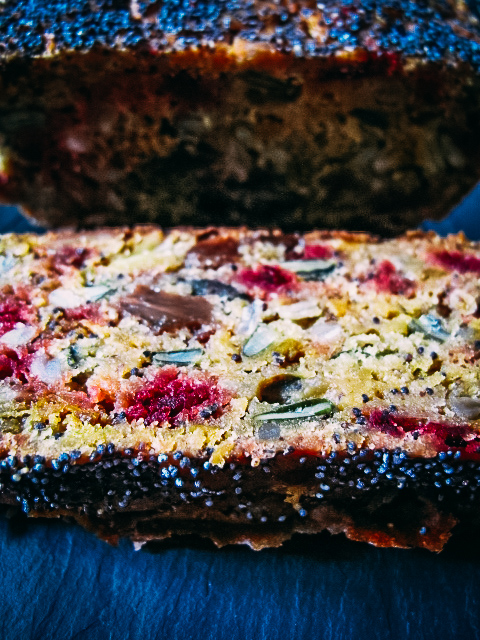
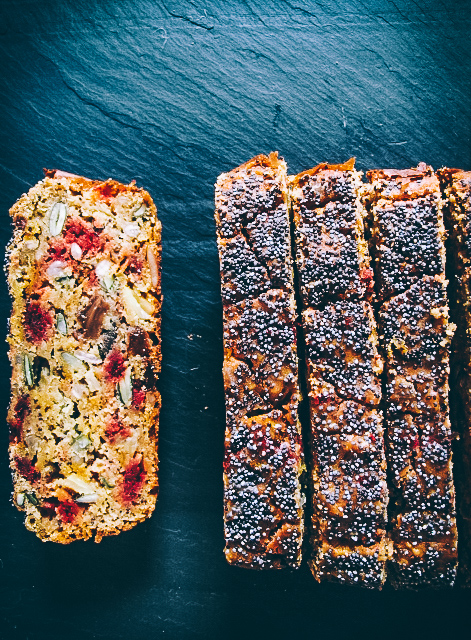
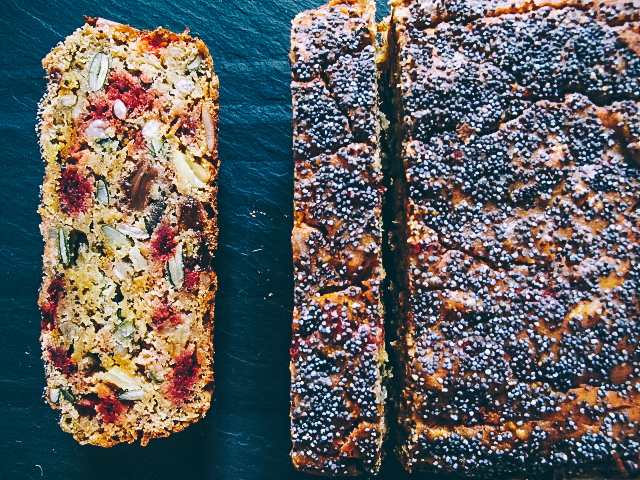
Fittingly though, I first made this beet + seed loaf cake, a major spin-off from Nigel Slater’s popular original, for a Mad Hatter Tea Party at work last spring. The party was for our volunteers and since most of them are retired master gardeners who also love earthy flavors and garden-inspired things, the cake was quickly gobbled up with approval. The tweaks I gave the original involve substantially less sugar and some more wholesome flours and it’s safe to say this is more of a breakfast or snack loaf, rather than a sugar rush in a slice.

IMG_3659

Beet + Seed Loaf Cake, makes 1 9×5 or 8×4-inch loaf
Recipe updated: 6/12/2021
The flours can be changed here, depending on what’s on hand. Instead of chickpea, sorghum or millet are great substitutes. I used ground flax seeds here instead of eggs, but an earlier version of this made with 2 eggs instead also resulted well. 

2 Tbs. ground flax seeds
6 Tbs. water

100 grams / 1 cup chickpea flour
70 grams  / a scant 1/2 cup brown rice flour
25 grams / ¼ cup arrowroot flour
½ tsp baking soda

1 tsp. baking powder
½ tsp. salt
½ tsp ground cinnamon
1 tsp. vanilla extract

¼ cup coconut oil
½ cup plain, unsweetened yogurt (I used coconut yogurt)
70 grams / 1/3 cup cane sugar
150-170g / 5-6 oz. raw beet, shredded coarsely
juice of half a lemon
½ cup raisins
1/4 cup mixed seeds (sunflower, pumpkin, etc.)
4 tsp. poppy seeds, divided

  • Preheat the oven to 350F / 180C. Line a loaf pan with baking parchment. A 9×5 will yield a larger, more compact loaf, and a slightly smaller pan will yield slices that are taller.
  • In a small bowl, combine the flax and water and then set aside for a few minutes.
  • Stir together the flour, baking soda, baking powder, salt and cinnamon. In a separate bowl, mix the vanilla, coconut oil, applesauce, and brown rice syrup. Stir in the flax meal.
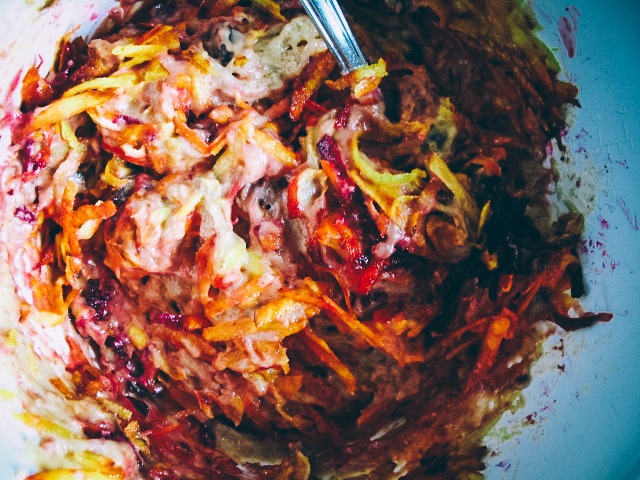
  • Grate the beetroot coarsely and fold into the mixture, then add the lemon juice, raisins, mixed seeds, and 2 teaspoons of poppy seeds. Then stir in the flour mixture.
  • Pour the mixture into the cake pan, smooth the top, and then sprinkle over the remaining 2 teaspoons of poppy seeds. Bake for 50-55 minutes and test with a toothpick to see if done. The cake should be moist inside but not sticky.
  • Leave the loaf to cool for a good 20 minutes before turning out of its pan on to a  cooling rack.