Celebrating the Season and the Athletic Off-Season

Every December for the last several, I’ve taken a running or training break. It has looked different every year, from the sharp and abstract non-injury pain and extreme anxiety that marked the beginning of my autoimmune ‘journey,’ to the slow easy miles that were part of most of the entire year afterward, to racing and recovering from my first and third marathons at CIM.

And then there was last year when a late-summer flare, autumn of struggle and grief over my grandfather’s death culminated in a December of laryngitis and bronchitis, so painful I carried a pillow around the house, holding it against my ribs as I braced against the wall each time I coughed. Thankfully I have an amazing chiropractor that somehow received the x-rays that weren’t supposed to be sent to him, massaged out and adjusted my painful, strained ribs, and gave me the go-ahead to put my body back in motion the day before Christmas.

When one either chooses—or is forced—to take a break, the return process can be such an amazing gift.

But how to mentally navigate the season of food, festivities, and excess when one is not as active? This is a concept I’ve struggled with off and on over the years. For the most part, I try to be mindful and stay intuitive in my eating patterns, but let in room for enjoyment and celebration.

In a recent training on eating habits of those that struggle or have struggled with anorexia nervosa, I learned that two habits tend to stay with individuals long after they’ve recovered. They’re two habits I identify with, and believe are actually pretty common in the athletic community. First is the inherent choosing of lower-fat foods; either foods lower in fat than the average population or low-fat foods in general, since meals will then be lower in overall calories. For athletes, this can often result due to a focus on carbohydrates and protein rather than outright avoidance of fat. The other is adherence to somewhat rigid food rituals – in whatever way that might present itself for the individual. Interestingly, these two habits are generally encouraged for those that are needing/wanting to lose weight, and therefore habits that are considered within the spectrum of disordered eating are promoted within the weight loss community.

Why am I bringing this up? Because the holiday season is ripe for advice and conversations that promote disordered eating and behaviors that take away the intuitive tuning-in to one’s body and state of being.

Faced with a plate of decorated cookies or a sad, (or maybe even delicious-looking) vegetable tray, which food would you choose? The answer for you depends on a great number of variables, but I hope this holiday season the decision can more often be made with intention and desire to care for yourself rather than punishment or tuning out needs to “think about it in January.”

This December, I am taking a training break but will still be enjoying movement of my body, and likely more of it than any of the last several years. I chose an early December half marathon to finish my training year rather than a full marathon and finished it neither going into an achy flare, or being ill and unable to run. I did however finish the last few weeks with a couple foods outside my normal go-tos of gluten and dairy causing digestive problems. Because I tend to be achier and more prone to inflammation than others considering my eating patterns, I plan to take the remaining weeks of festivities to be especially mindful and supportive of my body. A little decadent, inflammatory foods are okay when I’m feeling relatively good but can be especially problematic in excess (for me), or when my system is already challenged.

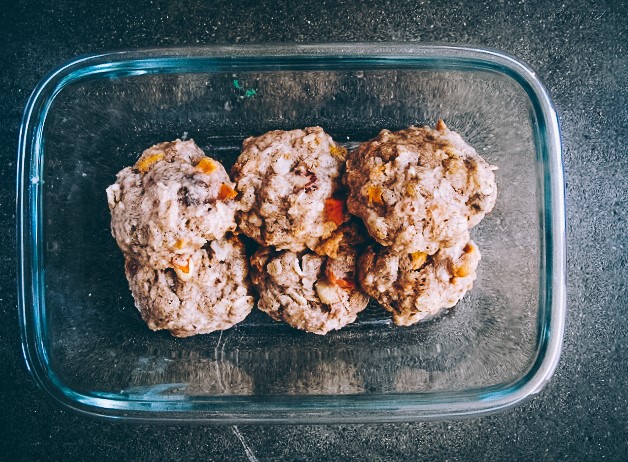
Cookie baking and gifting is part of my family’s holiday tradition and because of that, these festive and delicious Oatmeal Persimmon Cookies are part of this year’s line-up. They are perfect for the athletes that can’t get enough oatmeal in all the things. ;)

To balance out all the baking I will be doing, I’ve also been tasked with bringing that sad or delicious-looking vegetable and dip tray to the family festivities. Since cold, raw vegetables are especially challenging on one’s digestion in the winter— especially for those of us with sensitive systems—I haven’t decided if I’m going to deviate from the request and change up the raw vegetable / cold dip routine to some version that’s more warm and inviting to the system. If I do, let me know if you’d like me to share the recipe. 😊
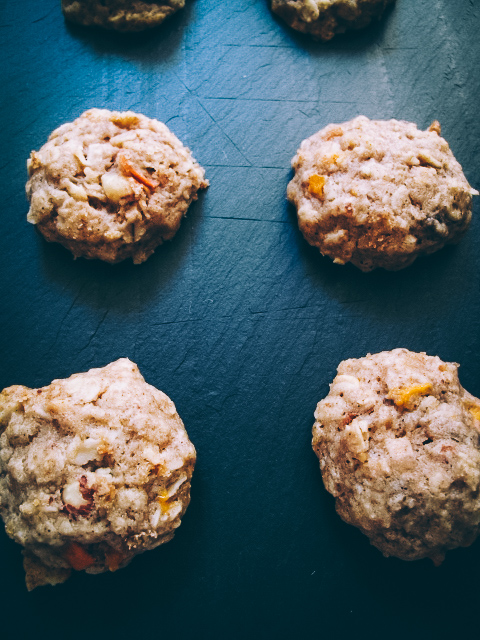
Oatmeal Persimmon and Hazelnut Cookies, makes ~24
Recipe Updated: 12/5/22

– Any all-purpose gluten free flour blend can likely be used, but I only experimented with my own mix. It is 70% whole-grain by weight.
The addition of two types of oil are a result of years of trial, testing, and learning from the wise recipe scientists at Cooks Illustrated. If only using one oil, choose coconut oil. Or use butter if it poses no problems. Digestive challenges and conscious choice to not use animal products aside for some individuals, butter is fabulous for baking.
Instead of the chia slurry, you can use 2 eggs instead.
The flat Fuyu persimmons are used in this recipe. If no persimmons are available near you, perhaps try another seasonal fruit, or a festive dried fruit such as cranberries or cherries.

2 Tbs. chia seed, finely ground (from 1 Tbs. whole chia seed)
6 Tbs. water
1 1/2 cups gluten-free flour mix
1 1/2 cups rolled oats, gluten-free as needed
2 tsp. baking powder
1/2 tsp. sea salt
1 tsp. cinnamon
1/2 tsp. nutmeg
1/2 cup coconut oil
1/6 cup sunflower or canola oil (2 Tbs. + 2 tsp.)
2/3 cup packed brown sugar
1 cup persimmon chunks
1/2 cup hazelnuts, toasted and roughly chopped

  • Preheat oven to 350 degrees F. In a small bowl, whisk the ground chia seeds and water to form a slurry. Set aside.
  • In a small mixing bowl, stir together all the dry ingredients and then set aside.
  • In a large mixing bowl, whisk together the oils, then sugar; then mix in the chia slurry.
  • Stir the dry ingredients into the creamed butter and sugar mixture until combined. Then stir in the persimmons and hazelnuts.
  • The mixture should be a little looser than standard cookie dough. At this point it can be chilled for about 30 minutes so the cookies don’t spread too much, or baked directly and they’ll be a little larger and slightly thinner.
  • Using a medium cookie scoop or a spoon, drop onto a baking sheet or stone and bake for 12-14 minutes, depending on your oven.
Meeting Your Protein Needs as a Vegan Athlete – and a quick socca recipe

IMG_3637-2

Updated: June 5, 2021

Over the years as I increased my athletic activity load and gradually began eating in a way that was more vegetable and plant heavy and included even less animal protein than before, I was curiously never asked the question that so often comes up when one stops eating meat. No one ever asked me Where do you get your protein?, the stereotypical question that so often comes up about plant-based diets. Knowing the basics of nutrition, and always adding a small protein source to my meals, I wasn’t at all worried about not getting enough. And interestingly, amongst many of the athletic women in my community who choose predominately vegan meals, it’s common that no one else is worried about protein either, with many active individuals like myself commonly eating plenty of whole grains and plant-heavy dishes that seem incredibly nutrient dense–yet they’re still left wondering over time why their health is in decline. I know I’ve for sure been in this scenario.

It wasn’t until I saw a nutritionist near the beginning of graduate school that I began to realize I too fell into dietary imbalance. My nutritionist mentor pointed out, You’re REALLY active. And for your activity level and because you tend to avoid meat, you need A LOT more protein. For quite a few months before I learned the particulars of what protein’s amino acids are doing in the body, and the higher needs of plant-based athletes, I really struggled with her suggestions to increase my intake.

Now before we get into the particulars, I’ll add a caveat that I do tend to eat some animal protein, usually in the form of monthly-ish wild-caught fish, a handful of eggs per month, and every once in a while, a bit of other meat. This blog post is not about the why’s of how I eat, or to encourage or discourage anyone from adopting a plant-based or vegan diet, it’s simply to support what the nutritional science currently knows about protein and our needs based on activity level and dietary choices.

As we all learned in grade school science, protein is made up of amino acids. Certain amino acids are essential to eat because the body, though incredibly wise, cannot make them out of other amino acids, as it otherwise can do.

Protein at its most basic understanding, builds muscle. We all learned that in elementary school and the idea is popularized in the cross-fit / weightlifting community. Beyond that role, amino acids from protein are used for bone health, enzyme formation to catalyze and carry out essential metabolic reactions, energy creation, to bind together skin and tendons, blood vessels, in the digestive system, and more. Nearly every one of the body’s 100 trillion or so cells is composed of various proteins, so our bodies require amino acids to function optimally. We don’t necessarily need “a lot” of protein in the diet, but we do need enough to meet our individual body’s needs.

Where vegetarian and vegans differ from meat-eating individuals is that they actually require a bit more protein as a percentage of body weight. This is because plant-based protein sources exhibit slightly lower digestibility than animal-based proteins (5). Athletes of all types who train more than about 30 minutes 3x / week require more too than the non-athletic community. And vegetarian and vegan athletes require just a bit more. So compared to their meat-eating counterparts, a vegan marathon or ultrarunner for example, needs quite a bit more protein than an individual who fuels with meat, and that protein can be more difficult to come by—especially when or if further dietary limitations come into play, such as when soy, legume, or nut allergies also limit food choices.

When I work with individuals, I don’t tend to give amounts or percentages of protein because we all eat food and food contains many different macro and micronutrients. In fact, even a plate of plain vegetables can offer a little boost of protein. I also never encourage anyone to get caught up in tracking meals rigidly to reach a certain number of either calories or nutrient values. That practice breeds its own problems.

But for the sake of being more precise, our current research suggests that vegan athletes need from 1.3-2.0 grams of protein per kilogram of body weight in the diet per day (1, 2, 3), with that intake being closer to the high end when there is a lot of high intensity or big-mileage pursuits in the regular training plan. For a 130-ish pound female athlete, that’s roughly 120 grams of protein per day, which is more easily achieved with two servings of fish or meat in the meal plan for a day, but maybe not so much with beans, quinoa, and lots of fresh vegetables. In other words, active vegan athletes training for challenging events are going to have to work to get the necessary protein in to meet the body’s needs and repair itself adequately. That’s where and why a good-quality protein powder might come in handy, as well as adding in little extras throughout the day and diet to help.

One other thing to note is that our currently data suggest that a good amount of protein per meal is from 20 to 30 grams, and this is enough to help the body begin to recover post-exercise and throughout the day. More than 30 grams in a single meal is not necessarily beneficial, i.e. the body metabolizes protein best when it’s eaten throughout the day in meals that contain that 20-30 gram amount. Weightlifters slamming 50+ grams post-workout aren’t necessarily doing their body any favors. And neither is the person that eats one large meal that contains a burger and bacon, or a surf and turf steak and seafood meal, or a meat-lovers pizza.

Beyond just needing more protein if you’re a vegan athlete, those with active inflammation, such as when healing from an injury, getting over a long illness, or dealing with an autoimmune disorder likely need more protein as well, since more (of all nutrients) are going to be used in the body’s process to repair itself.

For a lot of individuals who know or suspect their protein intake is low for their needs, I generally suggest making small changes that start to add up. Adding more nuts and seeds of all types to morning porridge, swapping the amounts of beans and rice for dinner (more beans / less rice), rotating in tofu and tempeh more often, and adding in chickpea or other bean flours where previously grain-based flour was used are examples I often employ in my own meal patterns.

When choosing to eat whole grains, there are also certain choices that are higher in protein than others, such as wild rice (6.6g / cup), spelt berries (6.6g / cup), quinoa (6.4g / cup), amaranth (6.4g / cup), buckwheat (6g / cup), oats (5.9g / cup), and barley (5.6g / cup) (4).

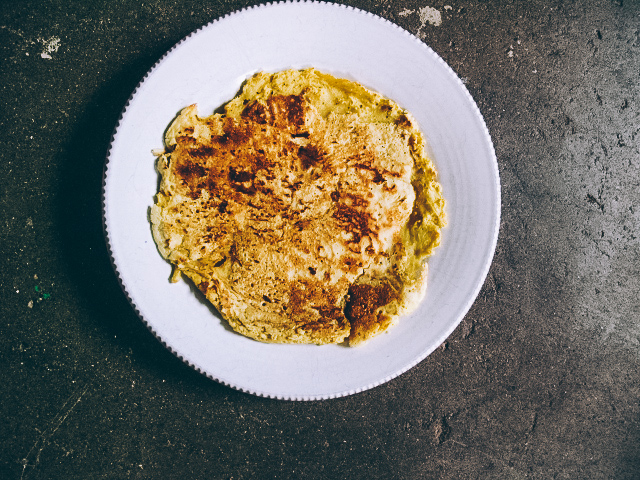
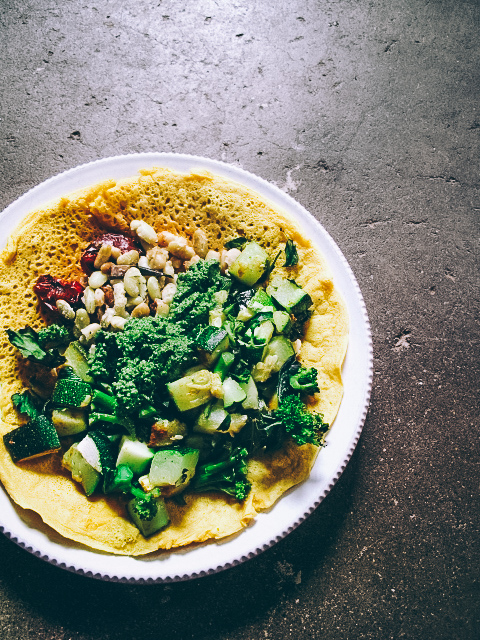
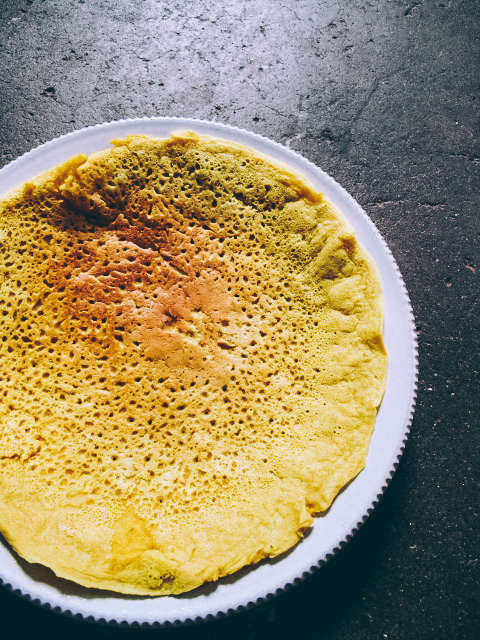
Another idea is to start being more creative with beans such as using a chickpea flour to make delicious socca, a French pancake or crepe-like flatbread that’s simple, quick, and tasty. Socca is one of my favorite ways to add a little extra protein boost in a meal when I’d otherwise reach for a more-carbohydrate-rich food, like bread, flatbread, or a cooked grain.

IMG_3632-2

If this topic interests you, below are a couple follow-up articles that give more meal ideas and delve deeper into one of the amino acids that frequently falls short in a vegan diet (leucine). They are all great short reads.
Thinking about becoming a vegan athlete? (with information about meeting leucine requirements)
No Meat Athlete Protein Bowl with 30 grams protein
The Full Helping’s protein meals combinations (not specific to athletes / contains some lower protein examples)

IMG_3548-2

Socca, makes 2
1 cup chickpea flour
1/2 tsp. baking powder
pinch of salt and dash or two of black pepper
1 tsp. turmeric
1 cup water
oil, just enough to coat the pan

  • In a medium bowl, combine the flour, baking powder, salt and pepper, turmeric, and then water. Whisk until you have a smooth batter. Set aside while you heat a large skillet over medium heat.
  • When the pan is hot, lightly brush the bottom with oil. Pour in half the socca batter (about 3/4 cup) and tilt the pan to distribute it evenly. Cook for about four minutes, until the bottom is browned and comes away easily from the pan, and then flip to do the same on the other side. Repeat with the remaining socca batter.
  • Remove the socca to a plate, and serve alongside or as a base for whatever other ingredients you prefer.

References:

  1. Kerksick, C.M. and Kulovitz, M. (2013). Requirements of Energy, Carbohydrates, Proteins, and Fat for Athletes. Nutrition and Enhanced Sports Performance. Doi: http://dx.doi.org/10.1016/B978-0-12-396454-0.00036-9.
  2. Zhou, J., Li, J., and Campbell, W.W. (2013). Vegetarian Athletes. Nutrition and Enhanced Sports Performance. Doi: http://dx.doi.org/10.1016/B978-0-12-396454-0.00036-9.
  3. Witard, O.C., Garthe, I., and Phillips, S.M. (2019). Dietary Protein for Training Adaptation and Body Composition Manipulation in Track and Field Athletes. International Journal of Sports Nutrition and Exercise Metabolism, 29(2), 165-174. Doi: https://doi.org/10.1123/ijsnem.2018-0267.
  4. Whole Grains Council. (2014). Whole Grain Protein Power! Retrieved from: https://wholegrainscouncil.org/blog/2014/02/whole-grain-protein-power.
  5. van Vliet, S., Burd, N.A., van Loon, L.JC. (2015). The Skeletal Muscle Anabolic Response to Plant- versus Animal-Based Protein Consumption. The Journal of Nutrition, 145(9), 1981-91. Doi: https://doi.org/10.3945/jn.114.204305. 

summer peach oatmeal

IMG_3590-2.jpg


At times over the years, I’ve considered making this a blog of oatmeal recipes. It’s pretty much my favorite food, I’ll eat it just about any time of day and it’s been my breakfast of choice for the strong majority of my life.

What I’ve added to the oats has definitely changed over the years however. From the brown sugar, milk, and stink bugs (aka raisins) of my youth, to the 10 carefully counted blueberries and half a banana of the days when I ate religiously too rigid during my eating disorder, to now when the toppings are varied and more numerous, oatmeal has been my tried and true.


IMG_3593-2.jpg


For many years the one ‘error’ I made in my morning bowl was that I was afraid of adding any healthy fats to it. I notice this with others too. Either seasonal fruits or berries or dried fruit are a popular topping but the thing about eating nutrient rich foods like fresh berries or anti-oxidant filled fruits (and vegetables), is that without a carrier fat in the meal they’re eaten with, those fat-soluble vitamins A, D, E, and K can’t actually be absorbed. We need healthy fats to make them effective. After years of being afraid of fat, I’m now a big fan of eating it in moderate amounts since fats are important for both cellular and hormonal health. Fats surround all cells and organelles in what is called the phospholipid bilayer and they are essential for proper cellular development, as well as carrying messages throughout the body in the hormones.

It’s important for us to eat a variety of fat types from foods rich in saturated fat to the unsaturated mono and polyunsaturated omega 6 and 3 fatty acids. Our modern diets tend to be less diverse and mainly have an abundance of saturated and omega-6 polyunsaturated fats. The omega 6 fats are found in soy, corn, safflower, sunflower and peanut oils, as well as sesame, sunflower, and pumpkin seeds, and most nuts. In whole food form, they are incredibly healthy and essential, but need to be balanced with omega-3 fats such as freshly ground flax, chia, walnuts and wild caught cold-water fish such as salmon, halibut, anchovies, cod, and sardines. The ratio of omega 6 to omega 3’s should be under 5:1 to be considered anti-inflammatory and for most individuals, this ratio is at least 20:1 or more.  For anyone with health concerns that are inflammation-related such as any of the common ‘lifestyle diseases’ like diabetes, high cholesterol or blood pressure, autoimmune conditions, arthritis of any type, and/or you are an otherwise healthy athlete looking to improve recovery between workouts, consuming those delicious nutrient-filled fruits and vegetables along with a healthy fat source and eating an optimal balance of omega 3s and 6s can be incredibly helpful. (My personal example is as an athlete trying to improve recovery and with an underlying chronic autoimmune/arthritic-like condition.)

One other thing to note is that all fat digestion first takes place in the mouth from chewing and saliva beginning to break down food–so chewing is important–and intestinal digestion requires bile salts and pancreatic lipase, an enzyme that specifically helps to break down and absorb fat molecules. If you find you don’t digest fats well, consider sending me a note. There are lots of natural ways to assist the digestive process!


IMG_3585.jpg


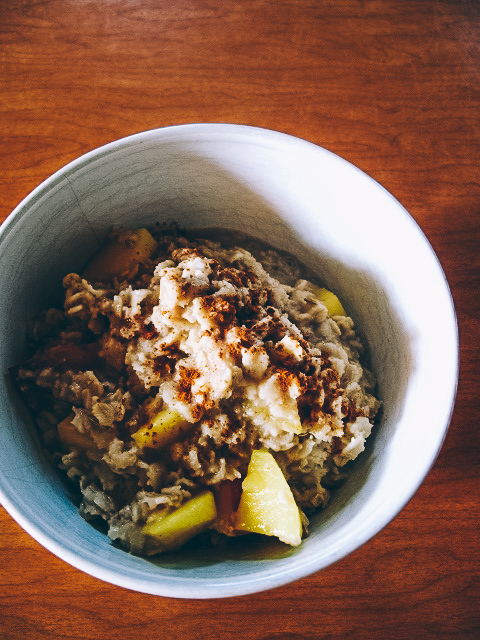
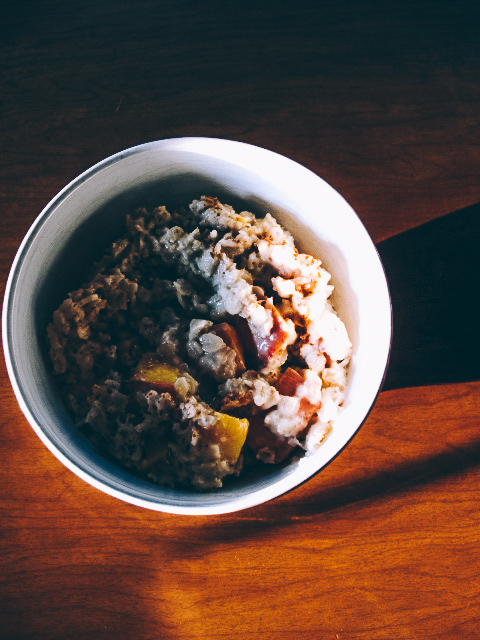
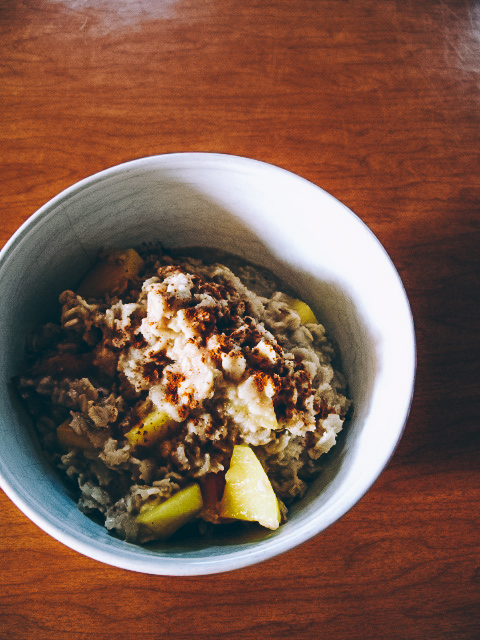
Now for my favorite oatmeal bowl lately. It’s got a super-seasonal local peach chopped and added in the last few minutes to old-fashioned oats, a pinch of salt, a teaspoon or so of tahini, and a good tablespoon of ground flax seed. In the summer, I tend to always add a sprinkle of fennel seeds, which also support digestion, and then top it all off with a bit of cinnamon.


IMG_3592-2.jpg


Creamy Summer Peach Oatmeal, makes 1 large or 2 small bowls

1 1/2 cups water
1/2-3/4 cups old-fashioned oats, gf certified as necessary
1/8 tsp. salt
1 tsp. fennel seeds
1 large peach, chopped
1 tsp. tahini
1 Tbs. ground flax
cinnamon, to sprinkle

  • Bring the water to a boil, add the oats, and turn down to medium-low. Cook until nearly all the water is absorbed and then stir in the remaining ingredients except the cinnamon. Cook until it is creamy and all the water is absorbed.
  • Turn out into a bowl and then top with cinnamon.